Table of Contents
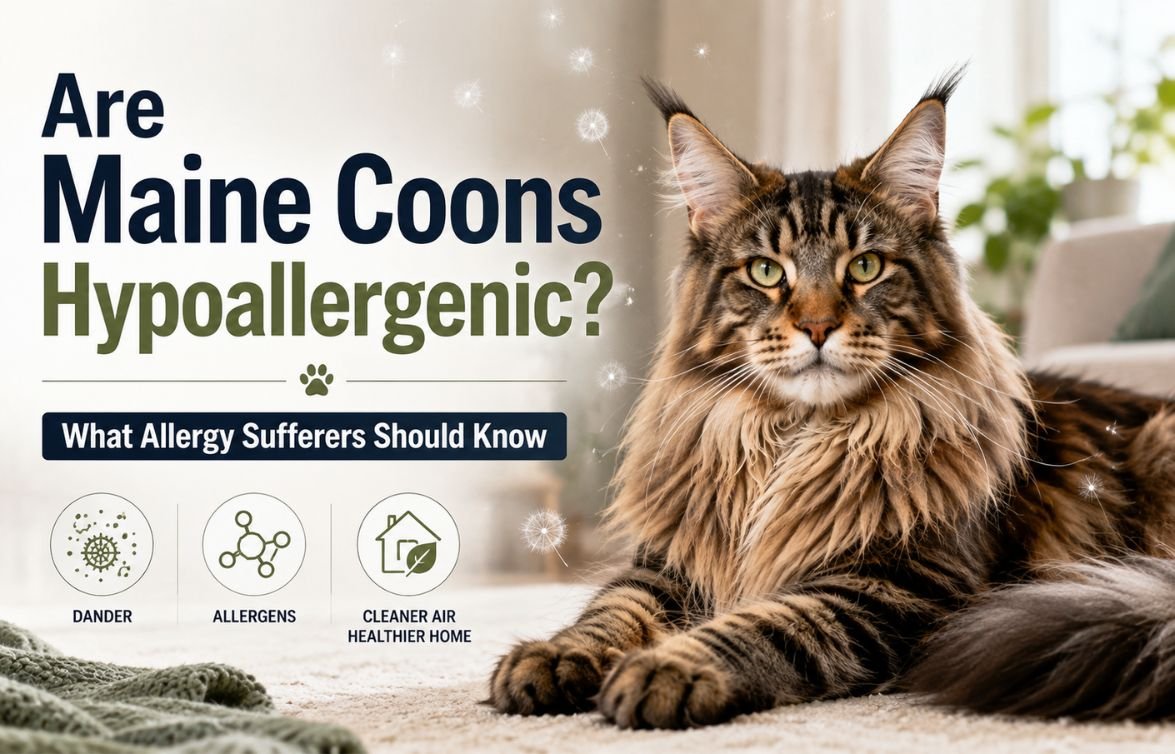
Many people love the idea of pet cats; however, allergies spike. For people with feline allergies, cats can trigger sneezing, runny nose, and, at times, the cats can trigger a full-on asthma attack. Because of this, it is common to No, Maine Coons are not hypoallergenic. They produce the Fel d 1 protein that causes cat allergies. Their thick coat and moderate-to-heavy shedding can spread dander and allergens throughout the home. However, some people with mild allergies can successfully live with a Maine Coon through regular grooming, cleaning, and air filtration.
If you love big, fluffy cats, you might be wondering, are Maine Coons hypoallergenic? This is one of the most common concerns for cat lovers, especially for those who experience allergies such as sneezing or itchy eyes when around cats. Maine Coons are known for their big, furry coats, large frames, and their friendly temperaments. It is important to know if they are allergy-friendly.
The answer is a bit more tricky than a definite yes or no. Cat allergies are attributed to more than just the fur. They are often the result of cat saliva and skin proteins. Since Maine Coons are large cats with long fur, and are known to shed a lot, people worry about them causing allergies in their homes. It may help you to know how cat allergies work in order to make the decision if Maine Coons are the cat breed for you. If you are still learning about this breed, our complete Maine Coon care guide can help you understand their daily needs before bringing one home.
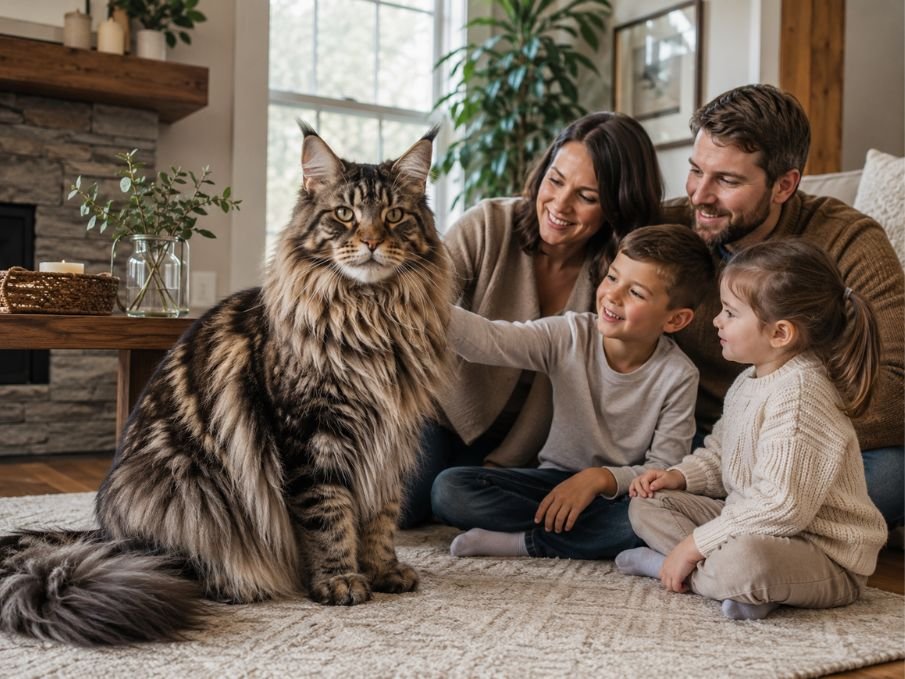
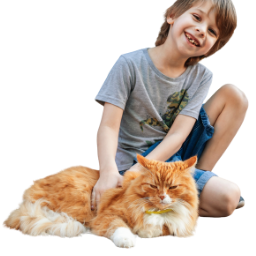
Large Maine Coon sitting indoors with a family.
What Does Hypoallergenic Mean in Cats?
Many pet owners are confused by the term hypoallergenic. Some think hypoallergenic means a pet will not cause allergy issues at all, but in reality, some pets may produce fewer allergens. No cat is completely allergen free, and even those breeds which are promoted as friendly to allergy sufferers still produce allergens.
The main allergen that is found in cats is the protein called Fel d 1. This protein is found in cat saliva and in the glands of a cat’s skin. It is even found in cat’s urine. It is common for cats to lick themselves, which causes the saliva to dry on the cat’s fur, and then the protein allergen particle is dispersed throughout the environment. These particles can land on furniture, carpets, clothing, and even bedding. It is even common for someone to suffer from allergies even when they do not directly come in contact with a cat.
According to the American College of Allergy, Asthma & Immunology, all cats produce allergens, and studies have not shown that cats can be truly hypoallergenic.
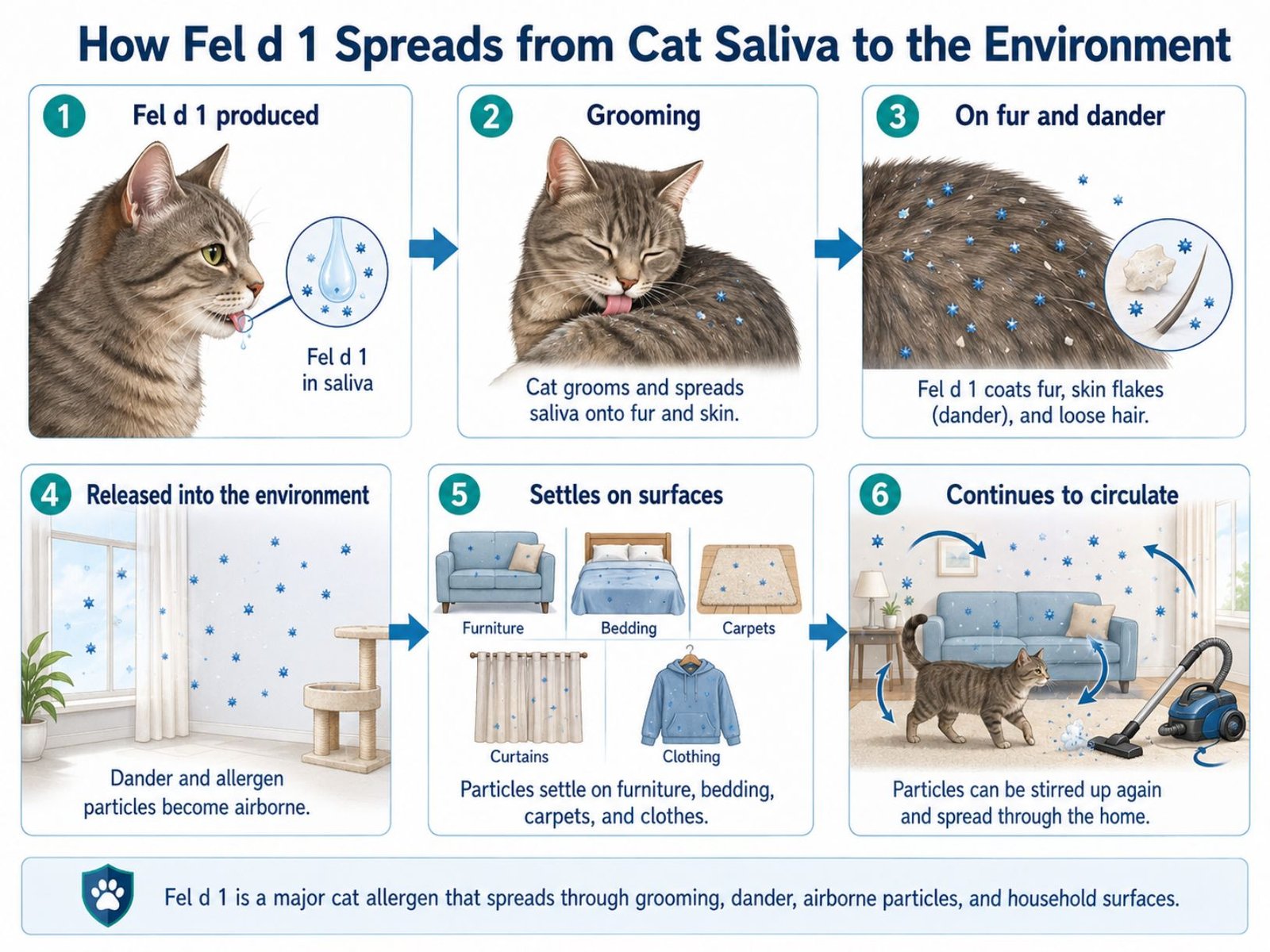
Diagram showing how Fel d 1 spreads from cat saliva to the environment.
Are Maine Coons Hypoallergenic?
The short answer is no. Are Maine Coon cats hypoallergenic? Though they are very popular cats, Maine Coons are not the hypoallergenic cats you are looking for. They produce all of the same allergy-causing proteins that other breeds produce. Their big bodies mean they probably shed more dander and fur around the house than other breeds.
Allergy symptoms and triggers are unique to every person. Some people have claimed to experience fewer symptoms in the presence of Maine Coons than with other cats. Even so, it doesn’t mean they are producing fewer allergens when compared to cats of other breeds. In fact, all cats produce varying levels of the Fel d 1 protein, so one Maine Coon can produce more allergens than another.
This is why the term “hypoallergenic cat” should be treated carefully, because reduced reactions do not mean a breed is allergen-free.
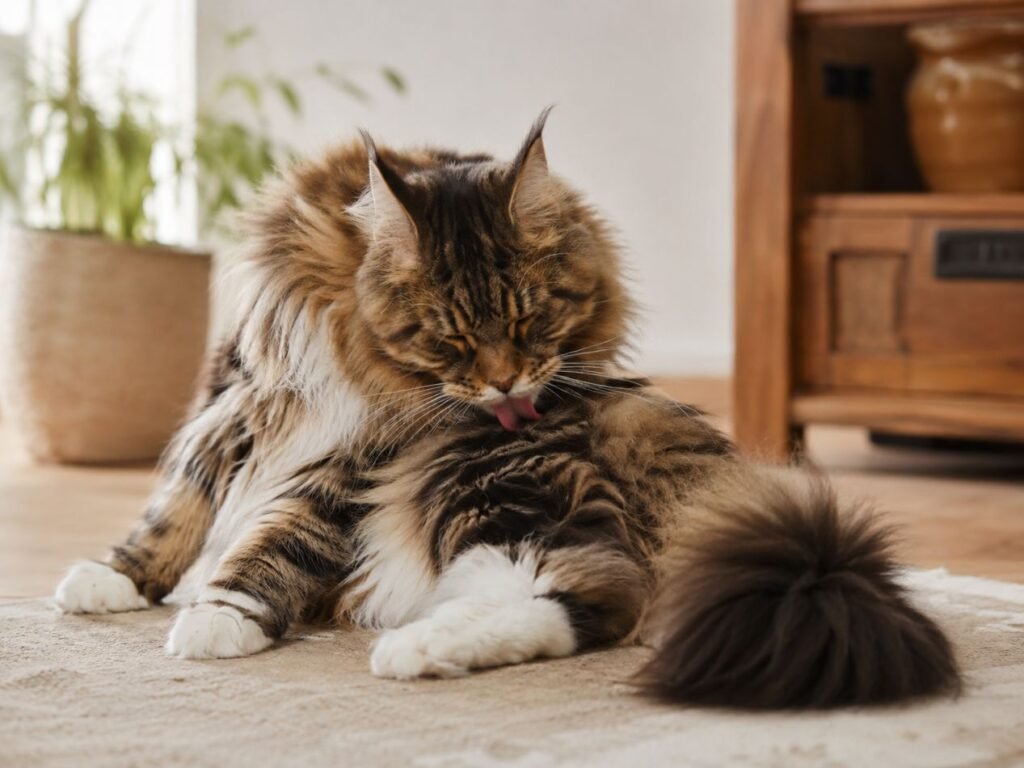
Maine Coon cat grooming itself.
What Causes Allergies in Maine Coon Cats?
Many people are wrong when they say that fur causes allergies. In truth, it is the small proteins that are found in skin, fur, and saliva that lead to allergies. Maine Coons spread their allergens when they lick their fur. As the Coons shed their fur, allergens spread throughout the entire house.
Dander plays an important role in allergy symptoms. Dander is small particles of skin that fall off of a cat. Maine Coons have thick fur; this leads to dander getting stuck in their fur and then falling out later. This dander mixed with saliva shed explains allergy symptoms that are caused by Maine Coons.
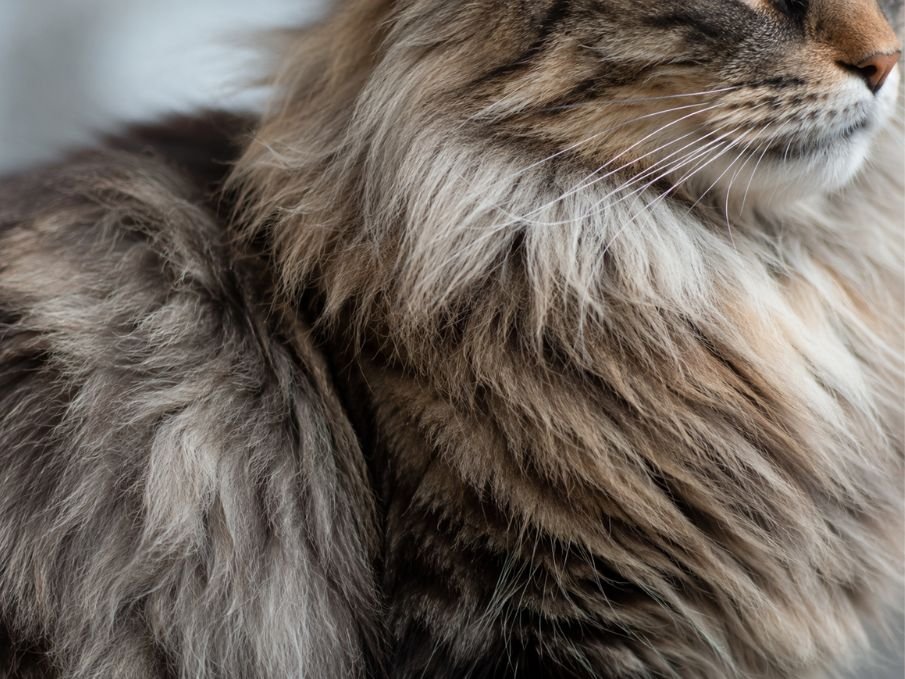
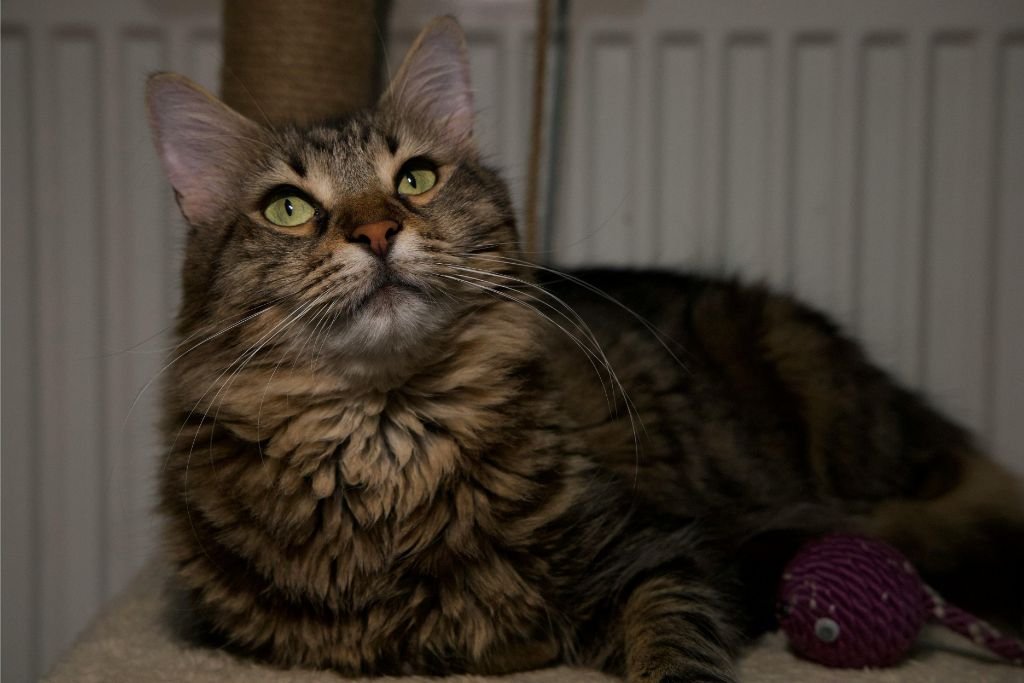
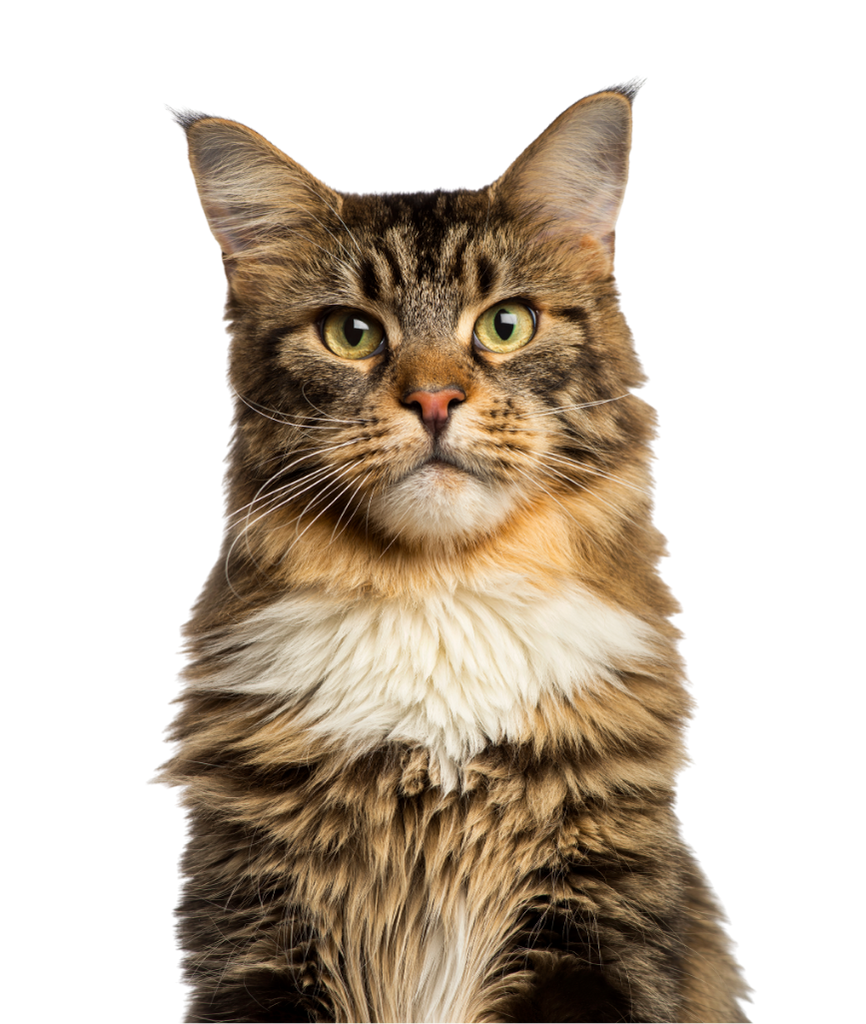
Close-up photo of a Maine Coon coat showing dense fur layers.
Do Maine Coons Shed a Lot?
There are a few reasons why people are wondering if Maine Coons are allergy-friendly. One reason is because of their luxurious coats. Maine Coons have a luxurious thick double coat that helped them adapt and survive the harsh conditions of the New England winter. While the coat is great quality and keeps them warm, it also means that they shed a lot.
Shedding occurs throughout the year and often increases during seasonal changes. While shedding itself does not cause allergies, it helps distribute allergies throughout the home. When the cat loses more fur it creates more allergen. The easiest way to control this would be grooming. For a deeper routine, you can follow our Maine Coon grooming guide to understand brushing, bathing, coat care, and shedding control. VCA Animal Hospitals notes that some cats shed very little, while others, including the Maine Coon, can shed a lot because of their coat type.
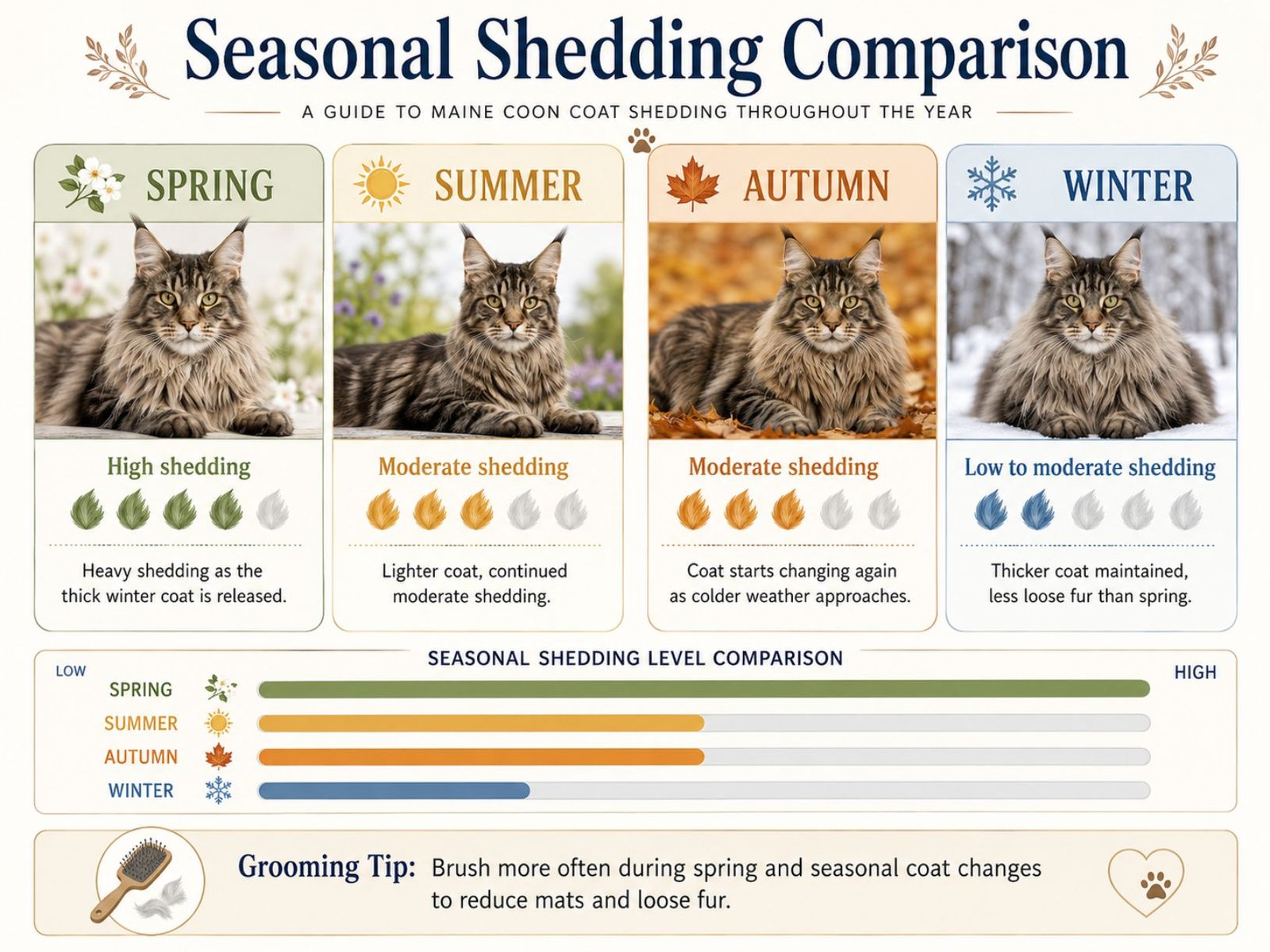
Seasonal shedding comparison infographic.
Maine Coon Allergies vs Other Popular Cat Breeds
When trying to find an allergy-friendly cat, many people see how Maine Coons compare to other breeds. If you are comparing options, our compare cat breeds page can help you look at coat type, size, temperament, and care needs side by side. The Siberian, Balinese, and Russian Blue are recommended often for allergy sufferers because of low allergen reports. Those reports can be inconsistent and depend on the individual cat.
Maine Coons are not typically viewed as one of the most allergy-friendly breeds. Their large size and thick coat can help distribute more allergens. Many allergy sufferers live with Maine Coons because of the combination of deep cleaning and lifting grooming standards.
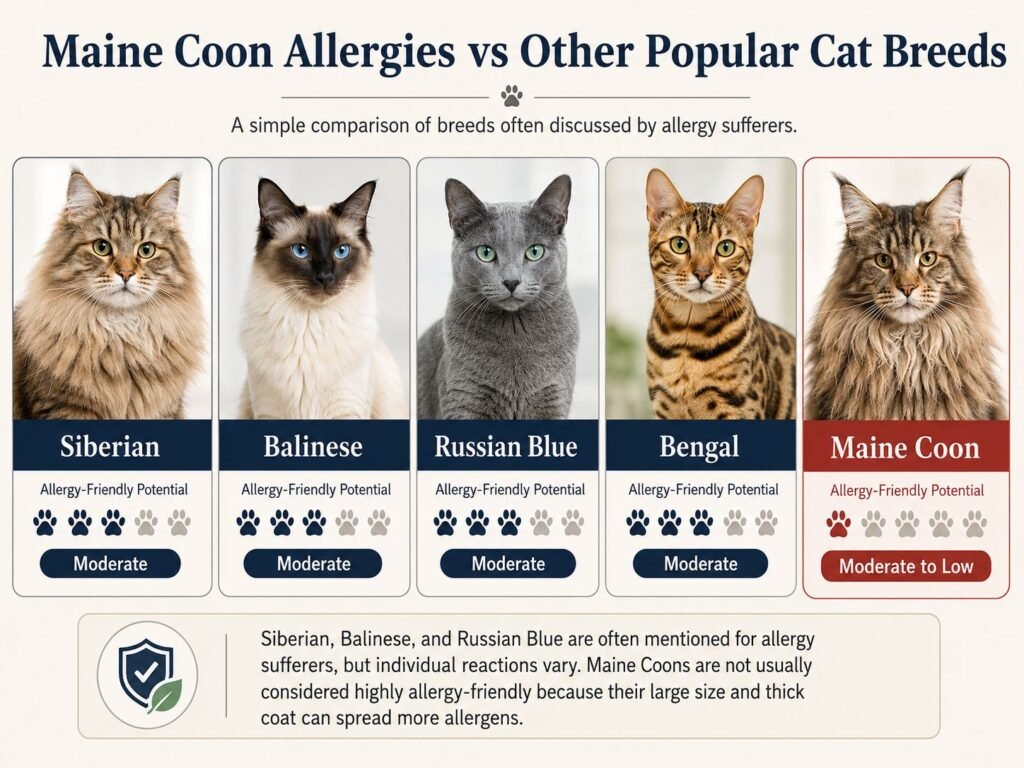
Side-by-side comparison of popular cat breeds.
Can Allergy Sufferers Own a Maine Coon?
Many allergy sufferers live comfortably with Maine Coons. The most important factor in determining whether you’ll be able to live with a Maine Coon cat is your own allergy severity. For mild allergies, a cat may be manageable if you keep a clean home, use an air purifier, and keep the cat strictly indoors. For more severe allergies, you may want to be more careful about getting any cat.
It is a good idea to spend time with a Maine Coon before deciding to adopt. You may want to visit a breeder, a rescuer, or a friend with a Maine Coon. It is much better to do this than to read descriptions about the breed. An individual cat is always going to be more important than the breed.
How to Reduce Maine Coon Allergens at Home
Allergens can be successful to manage with persistent effort rather than achieving a perfect environment. Regular vacuuming can help remove fur and dander. HEPA air filters can help remove airborne allergens. Regularly washing blankets and cleaning coverings for your cat’s bed and other furniture can help as well.
Another effective method can be the complete removal of cats in certain areas. A lot of allergy suffers do this in their bedrooms and keep it as an allergen free space. When these methods are used along with proper cat grooming, these method can help provide comfort to individuals with sensitivities. The EPA says portable HEPA air cleaners may help improve some allergy or asthma symptoms, but they should be used along with source control, cleaning, and proper ventilation.
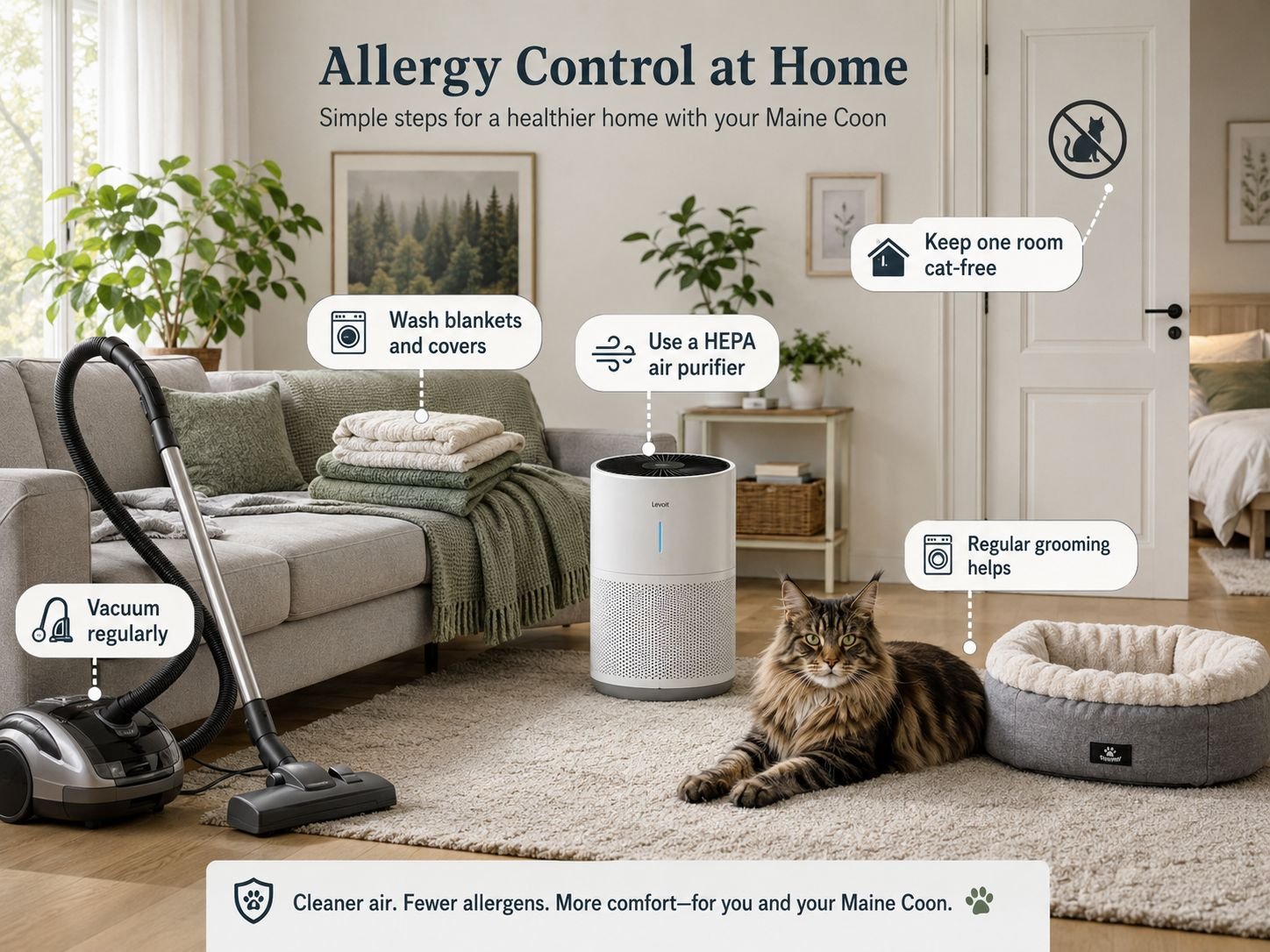
Home allergy-control setup with air purifier and vacuum cleaner.
Grooming Tips That May Help Allergy Control
Grooming a Maine Coon offers two benefits. Regular grooming keeps the Maine Coons coat fabulous by removing tangles, but also helps prevent allergic reactions by minimizing the loose fur flying around the house. Maine Coons are known to shed, but regular brushing done a few times a week helps minimize shedding. Choosing the right grooming tool also matters, so our guide to the best brush for Maine Coon cats can help reduce loose fur more effectively.
Bathing Maine Coons helps remove the fur that has dander and saliva, however, unlike regular shedding, dander and saliva do not continuously shed from a Maine Coons coat. Most Maine Coons dislike bathing, but introducing them to bathing slowly and gently can help them adjust to the procedure. There are also professional Maine Coon groomers to help owners maintain their cats.
The International Cat Association describes the adult Maine Coon as having a two-layered coat, which explains why regular combing is important for long-term coat control.
| Regular Grooming Task | Suggested Frequency |
| Brush Maine Coon | 3 to 5 times weekly |
| Trim Nails | Monthly |
| Clean Ears | Monthly |
| Bath Maine Coon | Every few months |
Why Regular Grooming Matters for Maine Coons
| Grooming Activity | Benefits |
| Brushing | Removes tangles, reduces shedding, and helps minimize loose fur around the home. |
| Bathing | Removes fur containing dander and saliva, which may help reduce allergic reactions. |
| Nail Trimming | Prevents overgrown nails and keeps paws healthy. |
| Ear Cleaning | Helps prevent wax buildup and potential ear infections. |
Note: Maine Coons are known to shed, so brushing them 3–5 times per week is recommended. While many Maine Coons dislike baths, introducing bathing gradually can help them become more comfortable with the process. Professional groomers can also assist with maintaining your Maine Coon’s coat and hygiene.
Health Factors That Influence Allergen Levels
Quality nutrition contributes to a healthy coat and minimizes dander. Skin health and reduced shedding are an effect of proper nutrition. Shedding and dander are also reduced by the combination of high-quality protein and essential fatty acids. You can also review our Maine Coon diet and nutrition guide to understand which nutrients support skin, coat health, and overall wellness. For food-specific recommendations, see our guide on the best food for Maine Coon cats before choosing a daily diet.
Some cats experience anxiety that affects their grooming behaviour. This results in a coat being laced with saliva. Regular vet appointments help reduce conditions that produce allergens that negatively affect others.
Are Male or Female Maine Coons Better for Allergy Sufferers?
Some studies have shown that unneutered, male cats produce more Fel d 1 – a protein responsible for producing cat allergy symptoms – than neutered males or female cats. That difference could potentially trigger more severe symptoms for those who are allergic to cats.
Spaying or neutering can help lower the amount of allergens. While that may not completely eliminate the allergy, it could make it easier for those allergic to cats to manage their symptoms. More important than spaying neutering cats is the individual variation of the person allergic to cats.
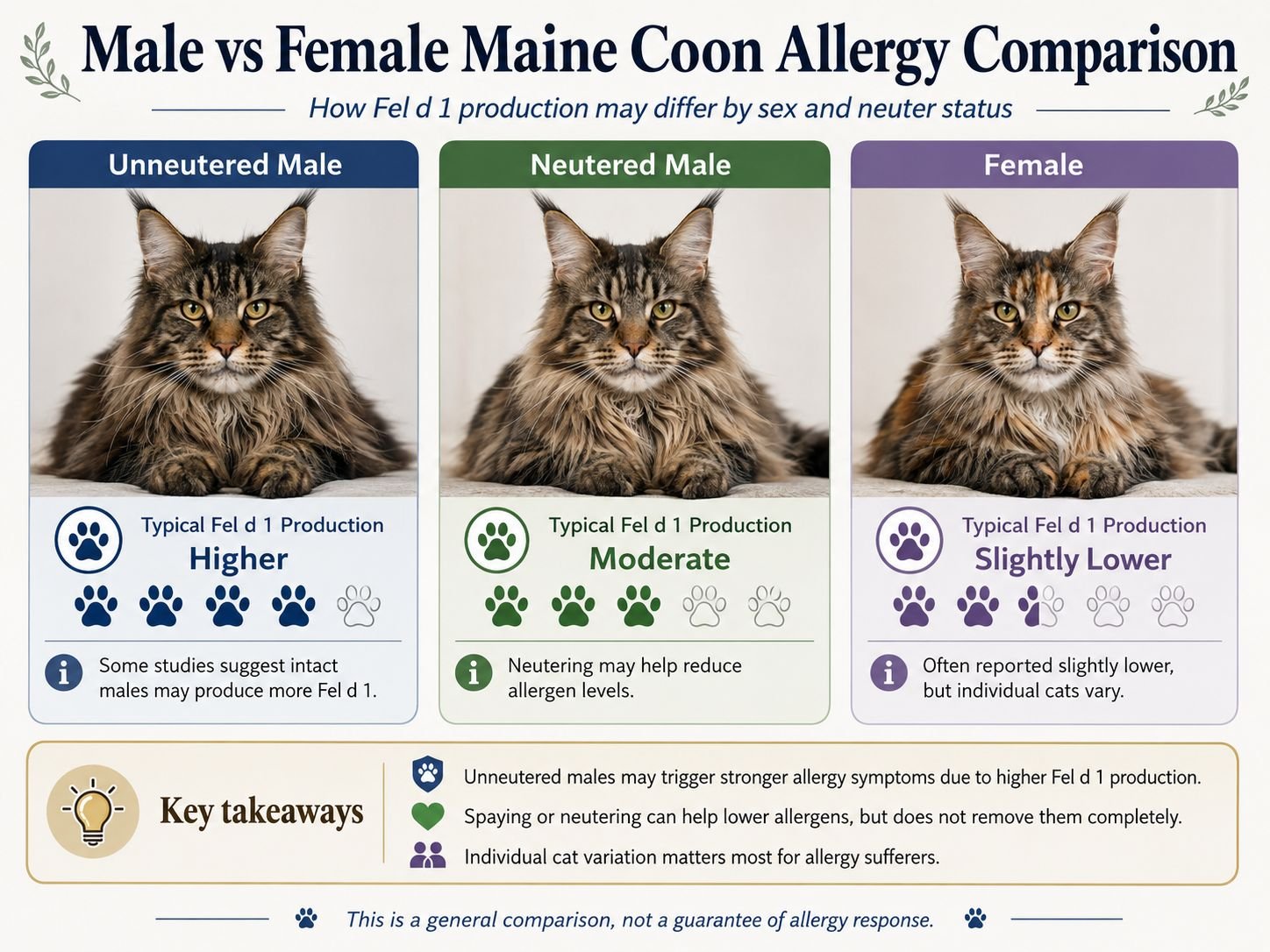
Male and female Maine Coon comparison.
Maine Coon Kittens vs Adults: Which Produces More Allergens?
Kittens usually look less likely to irritate an allergy because they are more compact and produce less of a total of allergens. But, cats start producing more allergens as they grow older. For a broader look at feline growth, our guide on when cats stop growing explains the key stages from kittenhood to adulthood. A kitten that does not cause an allergy today may cause a stronger allergy in the future. Owners will definitely want to
avoid thinking that the kitten will always be allergy-friendly, so they will want to look at the long-term picture when choosing a cat. This may mean spending time with older Maine Coons in order to truly see what the ownership of such a cat is otherwise going to look like.
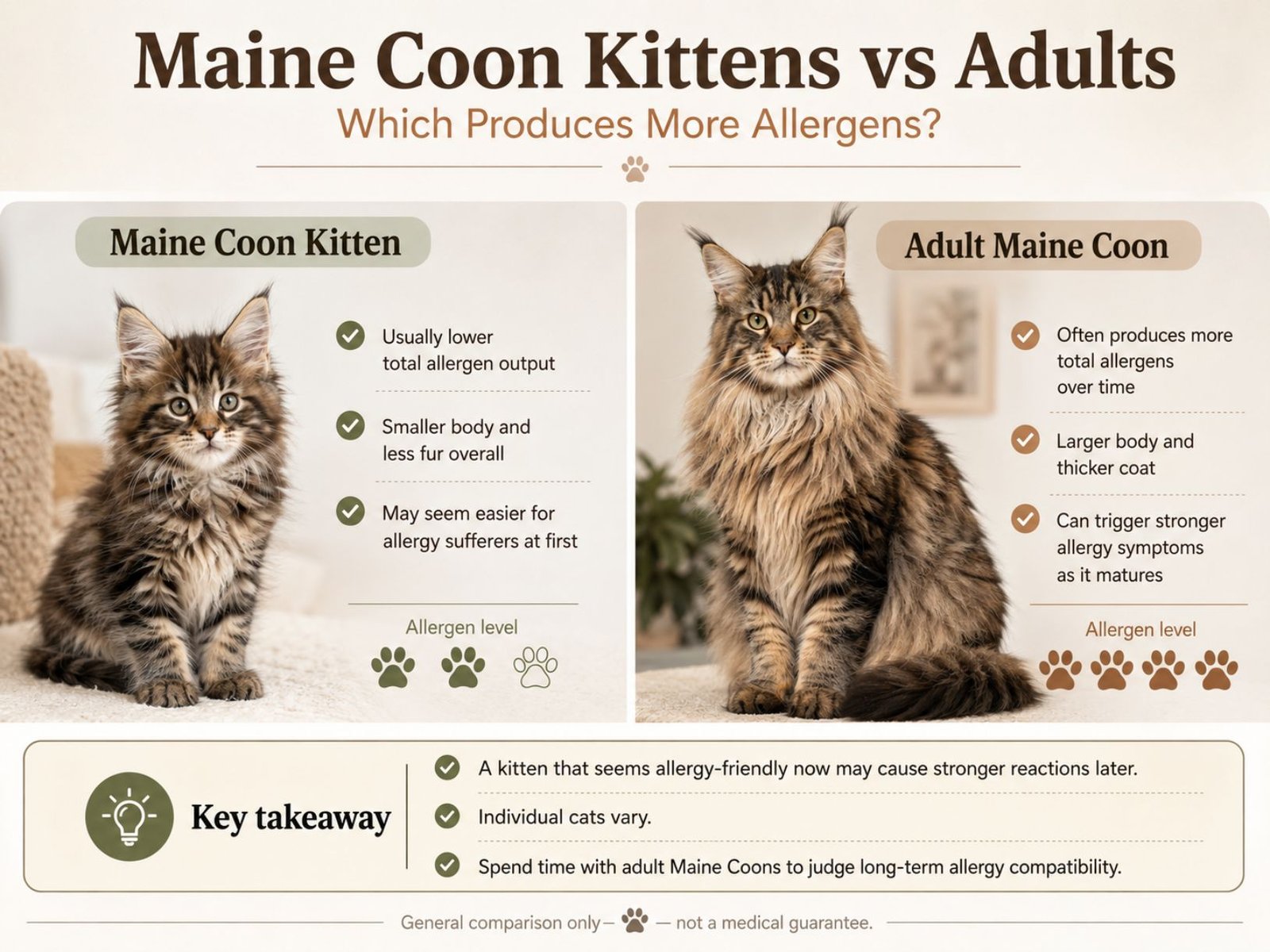
Side by side Maine Coon kitten and adult Maine Coon.
What Allergy Symptoms Can Maine Coons Cause?
Allergic symptoms can show within minutes to hours. Common symptoms include: sneezing, bloating, coughing, itchy skin, and swollen or watery eyes. Some may find it even harder to breathe.
It is important to consult a medical professional if symptoms are severe or persist for long periods. Testing for allergies can show if it really is cats that give you symptoms. Knowing for certain an allergy will lead to better management and choices.
Mayo Clinic lists common pet allergy symptoms such as sneezing, runny nose, itchy or watery eyes, nasal congestion, coughing, and asthma-related breathing problems.
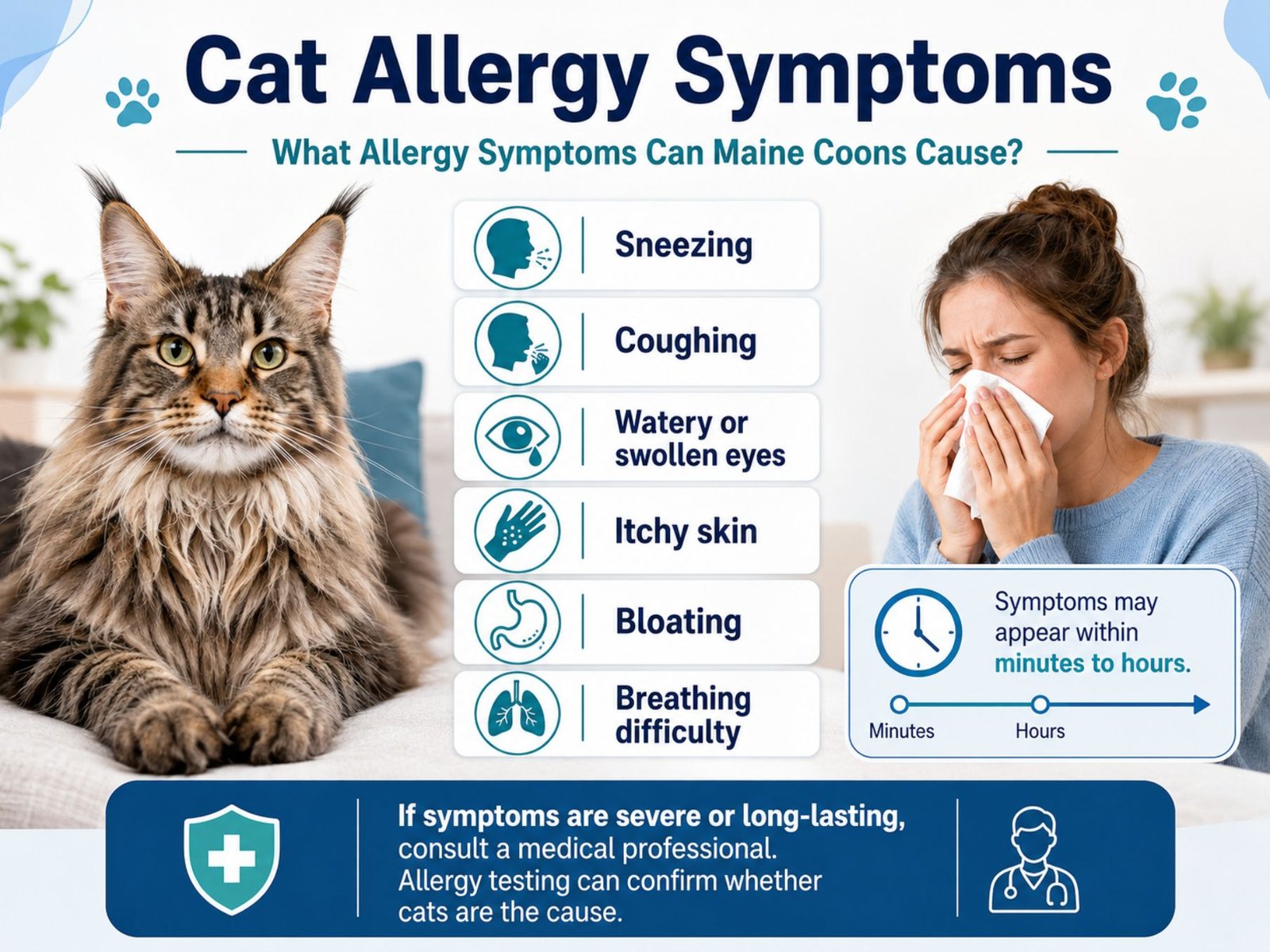
Cat allergy symptoms infographic.
Are There Cat Breeds That Are Hypoallergenic?
Numerous breeds claim to be hypoallergenic, but since no breed is entirely allergen free, all cats synthesize Fel d 1 at some level. Some breeds synthesize fewer allergen proteins, but that does not mean they are free from synthesizing Fel d 1.
For allergy sufferers, finding the breed that is the least allergenic and the least symptomatic individual cat, is a better goal than finding a completely allergen free cat. The most reliable way is to do personal testing.
Quote: “No cat is truly hypoallergenic, but some individuals may be easier for allergy sufferers to tolerate than others.”
Maine Coon Cat Breed and Allergies: The Pros and Cons
| Aspect | Maine Coon (Pros for Allergy Sufferers) | Maine Coon (Cons for Allergy Sufferers) |
| Allergen Production | Some individuals may produce slightly lower amounts of allergens than others | Not a hypoallergenic breed and still produces the Fel d 1 allergen |
| Coat Characteristics | Regular grooming can help reduce loose fur and dander in the home | Thick double coat traps dander and spreads allergens during shedding |
| Shedding | Consistent grooming may keep shedding more manageable | Heavy seasonal shedding can increase allergen exposure |
| Personality | Friendly and affectionate nature allows gradual allergy testing before adoption | Close physical contact may increase allergic reactions |
| Indoor Living | Adapts well to indoor environments where allergens can be managed | Allergens can accumulate on furniture, carpets, and bedding |
| Grooming Benefits | Frequent brushing and bathing may reduce allergen buildup | Requires ongoing grooming effort and maintenance |
| Family Compatibility | Excellent family cat with a gentle temperament | Allergy-sensitive family members may still react strongly |
| Saliva Allergens | Some owners report mild allergy symptoms with certain individuals | Saliva contains Fel d 1 protein which spreads onto the coat during grooming |
| Maintenance | Air purifiers, cleaning routines, and grooming can reduce allergen levels | Extra cleaning costs and time may be necessary for allergy management |
| Allergy Friendliness | May be tolerated by some people with mild cat allergies | Not considered hypoallergenic by veterinary or breed standards |
| Coat Beauty | Beautiful long coat and majestic appearance | Long fur can carry more dander, dust, and allergens around the home |
| Ownership Experience | Possible option for allergy sufferers who react mildly to cats | People with moderate to severe cat allergies may still experience symptoms such as sneezing, itchy eyes, and congestion |
Should Allergies Stop Someone from Owning a Maine Coon?
When there are allergies to consider, getting a Maine Coon means being honest with yourself about how you react. If you’re allergic but the symptoms are mild and manageable, then you may be able to bring one home with some precautions. Allergies are something that many people can successfully live with and coexist with a Maine Coon for years.
If the allergies are on the more severe side, it’s even more important to spend time with the Maine Coons you are thinking about bringing into your home, before the adoption. Each situation is different, but the right precautions will allow you to have a successful and comfortable relationship with your future Maine Coon cat.
What Veterinarians Say About Maine Coon Allergies
Veterinarians generally agree that no cat breed is completely hypoallergenic. Cat allergies are usually triggered by the Fel d 1 protein found in saliva, skin oils, and dander rather than fur itself. Because Maine Coons produce this protein like other cats, allergy sufferers should spend time with the breed before adoption to evaluate their personal reaction.
Frequently Asked Questions.
Are Maine Coons hypoallergenic for people with asthma?
No. Maine Coons still produce allergens that may affect individuals with asthma. Allergy severity varies from person to person.
Do Maine Coons produce less Fel d 1 protein?
There is no evidence that Maine Coons consistently produce less Fel d 1 than other breeds. Individual cats can vary significantly.
Can you live with a Maine Coon if you are allergic?
Many people with mild allergies successfully own Maine Coons. Proper grooming and cleaning routines often help reduce symptoms.
Are Maine Coon kittens less allergenic than adults?
Kittens usually produce fewer allergens because they are smaller. Allergen production often increases as the cat matures.
How often should a Maine Coon be groomed to reduce allergens?
Brushing three to five times per week helps remove loose fur and dander. Consistent grooming also improves coat health.
Which cat breed is considered more allergy-friendly than a Maine Coon?
Breeds such as the Siberian, Balinese, and Russian Blue are often recommended for allergy sufferers. However, no breed is completely hypoallergenic.
Can air purifiers help with Maine Coon allergies?
Yes. HEPA air purifiers can remove airborne allergen particles and improve indoor air quality for allergy-sensitive households.
Conclusion
So, are Maine Coons hypoallergenic? No. Maine Coons are not hypoallergenic. Like other cats, they produce the allergy-causing proteins. Maine Coons are large cats with thick fur which means they also shed more and can spread more allergens in the home.
That said, many who suffer from allergies still enjoy life with a Maine Coon. With good grooming, they can shed less. Regular cleaning and air filters can help reduce allergens as well. If you want one of the gentle giants, you can manage your home for allergens and keep a Maine Coon.
Most important truth is that the breed does not matter, your body decides.