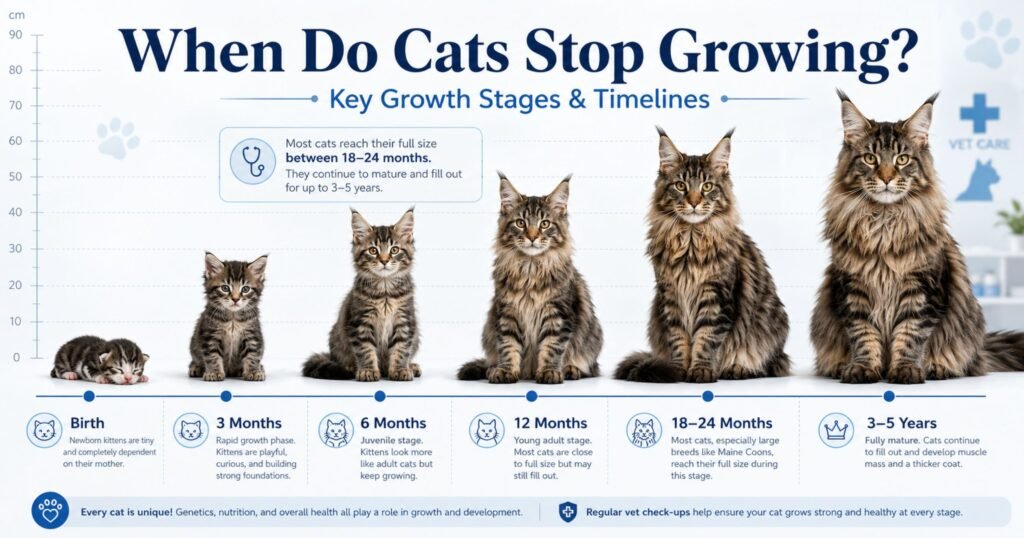
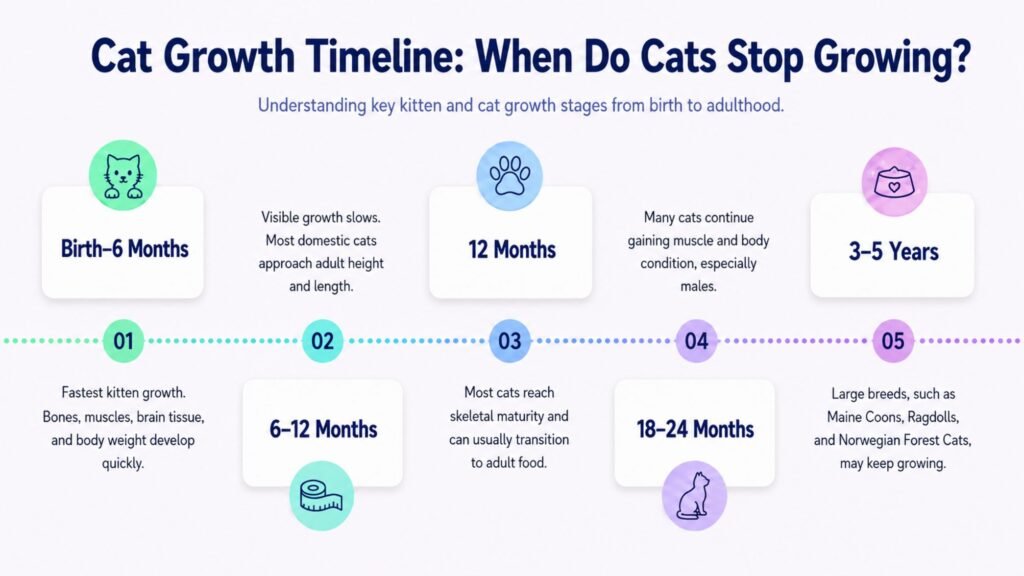
Most domestic cats stop growing in height and length by 12 months. Many cats continue gaining muscle and body condition until 18 to 24 months. Large breeds, such as Maine Coons, Ragdolls, and Norwegian Forest Cats, may keep growing for 3 to 5 years. According to the Cornell Feline Health Centre, most domestic cats grow until about 12 months while large breeds like Maine Coons may continue maturing for several years.
Growth depends on breed, sex, nutrition, genetics, neuter status, and health. A kitten that stops gaining weight, becomes lethargic, develops diarrhoea, or looks much smaller than littermates should be checked by a veterinarian.
Having a new kitten at home is wonderful. Some people say that new kittens develop so quickly, that you can even see the changes happening to their appearance from day to day. Before you know it, the tiny ball of fluff with soft skin has transformed into a full grown cat.
With such rapid changes, many new cat parents began to wonder, how long do cats grow for?
As a responsible soon to be a cat parent, it is important to know the stages of a cat’s life and the milestones that a cat makes. If you are raising a slow-maturing breed, our Maine Coon Care guide can help you understand daily care needs during each growth stage. You may also need to know this information if your cat needs a new cat tree. For larger cats, especially Maine Coons, choosing the Best Cat Tree for Large Cats can give them safer climbing space as their body size increases.
The purpose of this guide is to help you understand cat growth and the impact of nutrition and genetics on growth, and how to know when your cat has reached their grown up stage.
Veterinary review note: This article explains general cat growth timelines for healthy domestic cats. A licensed veterinarian should evaluate kittens with poor weight gain, lethargy, diarrhea, parasites, delayed development, or sudden weight changes.
| Term | Definition |
| Growth plates | Growth plates are cartilage zones near the ends of long bones where bone length increases during development. |
| Skeletal maturity | Skeletal maturity means the major bones have reached adult length. |
| Physical maturity | Physical maturity includes adult height, body length, muscle mass, fat distribution, and body condition. |
| Sexual maturity | Sexual maturity means a cat can reproduce, but it does not always mean the cat has finished growing. |
| Nutritional adulthood | Nutritional adulthood means the cat can usually transition from kitten food to adult maintenance food. |
The growth of cats and its science
We need to look at a cat’s biology to answer the question, when do cats stop growing. Physical growth happens in many different systems of a cat’s body. The growth of a cat is a biological phenomenon.
The Feline Skeletal Maturity Timeline
The major growth of a cat’s skeleton happens in its first six months of life. This growth is facilitated by the growth plates in the long bones.
Epiphyseal plate closure marks the most definitive biological stage of physical maturation in cats. Veterinary texts confirm that epiphyseal (growth plate) closure timing varies by breed and nutrition, and is the standard measure for skeletal maturity. In the case of cat development, epiphyseal plates progress from a cartilage state to complete bony closure. If the plates fuse, it indicates that the skeletal system has reached its maximal height and length. After bone length growth slows, cats may still gain muscle and body fat as they reach full physical maturity.
Source note: Veterinary anatomy references describe growth plates as cartilage areas near the ends of long bones. These plates support bone length growth during kitten development and close as cats reach skeletal maturity.
At What Age Is a Cat Considered an Adult?
Cats are classified as biological and nutritional adults at 12 months. Pet health authorities like the American Association of Feline Practitioners note that by 12 months most cats have reached adulthood though larger breeds continue decomposing bone growth. By that time, most common domestic cats have nearly completed their skeletal development. The completion of skeletal development is neither the termination of physical development nor the termination of psychological development.
What Is the Growth Timeline for Cats?
From a biological perspective, the most accurate answer to the question, “how old are cats when they stop growing,” would be to say the growth of the cat is completed in a series of stages.
When Do Kittens Stop Growing?
The most rapid period of growth in cats is during the time from birth to 6 months of age. During this period, the kitten’s metabolism is extremely active and supports the rapid growth of bone and muscle mass and brain tissue. It is normal for growth to decelerate after the 6 to 9 month period. The answer to the question of when do kittens stop growing in the most visible way, is around 6 months of age.
When do female cats stop growing?
The first question all cat owners want to answer is how big will their cats get? Gender has a considerable effect on size. When do female cats stop growing? Female cats, otherwise known as queens, are typically smaller than their male counterparts, and usually reach their full skeletal size earlier. This takes place between 9 and 12 months, with Most female domestic cats show little increase in height or length after their first birthday, although body condition may still change.
When do male cats stop growing?
Males, or toms, are slower to develop. Cats are generally considered to have reached their full height by 12-15 months, but toms take their time filling out their frames. They are often filling out their frames until 18-24 months. In terms of when do cats stop growing, males are definitely closer to 2 years than 1.
Growth vs filling out
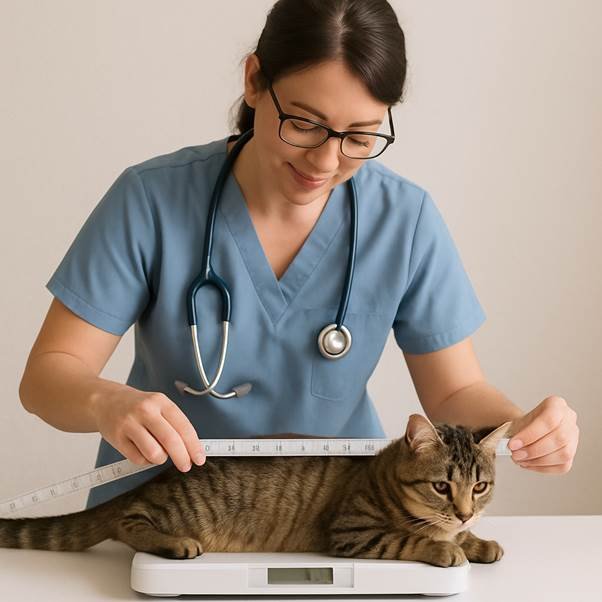
Cats do not stop all development at one age. Most domestic cats stop growing in height and length around 12 months. Many cats continue gaining muscle and body condition until 18 to 24 months. Large breeds may mature later.
Is My Cat Still Growing or Just Gaining Weight?
A cat is still growing when height, length, and frame size increase. A cat is gaining weight when body fat or muscle increases without major skeletal change. Regular weighing and body condition scoring help separate growth from excess weight.
What Body Condition Score Should a Growing Cat Have?
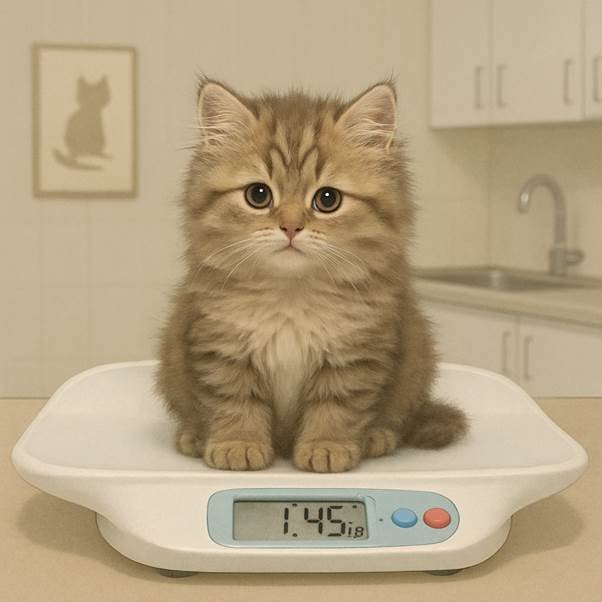
A growing cat should have a visible waist from above and ribs that can be felt with light pressure. A very thin kitten, round-bellied kitten, or rapidly fattening kitten needs feeding review or veterinary assessment.
Does Indoor Lifestyle Affect Cat Growth?
Indoor lifestyle does not usually change skeletal size, but it can affect muscle mass, calorie use, and body fat. Indoor cats may need portion control after neutering because energy needs can decrease.
Can Illness Slow Kitten Growth?
Illness can slow kitten growth by reducing appetite, nutrient absorption, oxygen delivery, or energy availability. Parasites, chronic diarrhea, respiratory disease, congenital disorders, and poor diet can cause poor weight gain.
Breed and Genetics: How Big Do Cats Get?
When do cats stop growing? The answer to that question is cat dependent. The only way to answer that question, and really how big they’ll actually get, is to examine their DNA. Interestingly, some cats are just more likely to get bigger than others.
Maine Coon vs domestic cat growth rate
For typical mixed-breed domestic shorthairs, full size is reached around 12 months. With larger breeds, like Maine Coons, the story is much different.
Maine Coons grow much slower than many domestic cats. Domestic Cats usually finish growing after 1 year, however Maine Coons can keep growing until 5 years!
Slow Maturing Cat Breeds List
Maine Coons aren’t the only late bloomers. The Cat Fanciers’ Association details breed-specific maturity patterns, especially how and why large breeds like the Maine Coon grow much slower than average domestic short hairs. If you are still deciding which breed fits your lifestyle, our Compare Cat Breeds page can help you understand size, coat type, temperament, and care differences. If you own any of the breeds on this slow maturing cat breeds list, expect a much longer timeline before you see their final adult size:
- Maine Coon: 3 to 5 years
- Ragdoll: 3 to 4 years
- Norwegian Forest Cat: 4 to 5 years
- British Shorthair: 3 years
- Savannah Cat: 2 to 3 years
Average Adult Cat Weight by Breed
How much do you think your kitty will weigh? Here are a few popular breeds with their average weights:
- Domestic Shorthair/Longhair: 8–10 lbs (females), 10–12 lbs (males)
- Siamese: 6–8 lbs (females), 8–11 lbs (males)
- Persian: 7–10 lbs (females), 9–13 lbs (males)
- Ragdoll: 10–15 lbs (females), 15–20 lbs (males)
- Maine Coon: 12–15 lbs (females), 15–25 lbs (males)
Some wild-looking domestic breeds also have unique body shapes, so you may enjoy our guide to Cat Breeds That Look Like Cheetahs and Leopards.
Kitten Weight by Month
For typical domestic cats, one pound gained for each month for the first four to six months is a good benchmark. The following is a kitten weight by month guideline:
- At Birth: 3-4 ounces
- 1 Month: 1 pound
- 2 Months: 2 pounds
- 3 Months: 3 pounds
- 4 Months: 4 pounds
- 6 Months: 5-7 pounds
- 12 Months (Fully Grown): 8-12 pounds
Note: This chart applies to standard domestic cats. Large breeds will easily exceed these numbers.
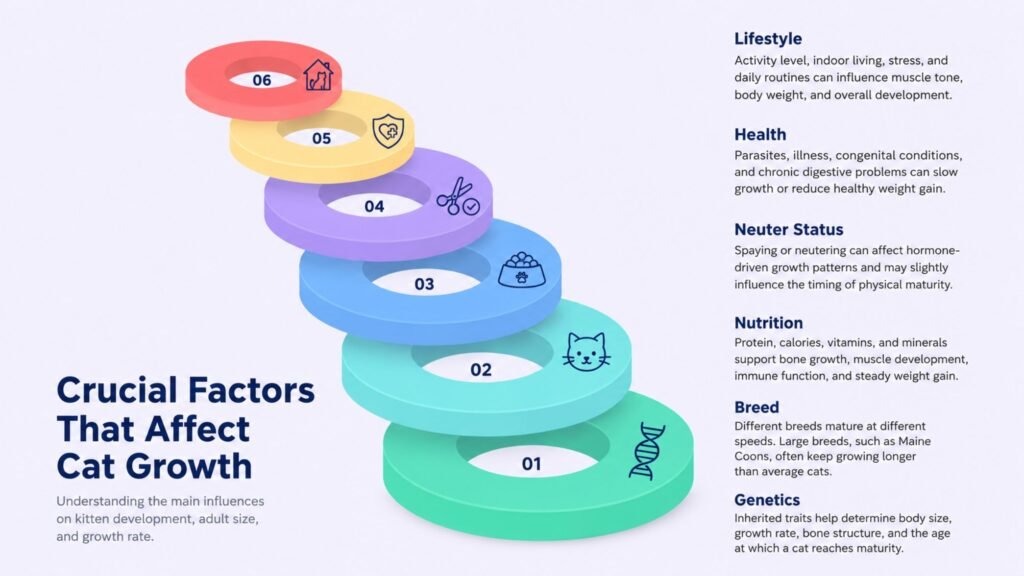
Crucial Factors That Affect Cat Growth
In addition to genetics and breed, there are several external factors that determine how and when cats will stop growing, and how healthy of a growth it will be.
- The Impact of Nutrition on Feline Development
- How to Tell if a Kitten is Stunted
- Spaying and Neutering Effects on Bone Growth
The Impact of Nutrition on Feline Development
Nutrition directly affects kitten bone growth, muscle development, immune function, and weight gain. According to the World Small Animal Veterinary Association (WSAVA), kitten diets must be specially formulated with higher energy and mineral ratios to support proper skeletal growth. A cat’s body requires a large amount of energy to develop healthy organs, joints, and bones.
When considering kitten vs adult cat nutrition, there is a significant difference. Kitten food is developed to be higher in calories and protein, as well as the right ratios of calcium and phosphorus to aid in the development of the skeleton. Weak bones, stunted growth, and nutritional deficiency can all be a result of feeding a growing kitten adult cat food. Generally, the switch from kitten to adult cat food is done at 12 months of age for smaller breeds. For larger breeds, the switch should be done under the guidance of a vet.
Source note: AAFCO nutrient profiles and WSAVA nutrition guidance separate kitten growth diets from adult maintenance diets because kittens need higher energy, protein, calcium, and phosphorus during development.
How to Tell if a Kitten is Stunted
Kittens may sometimes fail to thrive. Knowing how to tell if a kitten is stunted can help you identify severe medical issues. The Companion Animal Parasite Council lists parasitic infections and malnutrition among key causes of poor weight gain and stunted growth in kittens. Signs of stunted growth are:
- Failure to Gaining Weight: If your kitten does not follow the “pound a month” rule.
- Disproportionate Features: A large head with a small and frail body.
- Lethargy: Kittens are usually very active and playful. A weak and sleepy kitten is a cause for concern.
- Dull coat with a potbelly: A dull coat with a swollen belly can indicate intestinal parasites, malnutrition, or digestive disease.
If you see any of these cause for concern, you should take your kitten to the vet.
Source note: Veterinary references list poor weight gain, lethargy, diarrhea, dull coat, swollen belly, and weakness as signs that a kitten may need veterinary assessment.
Effects of Spaying and Neutering on Bone Growth
Many people wonder how getting a pet “fixed” will affect the development of the pet. Spaying and neutering can affect growth plate closure because reproductive hormones help signal bone maturation.
Hormones of the reproductive system, especially the sex-related ones, will signal growth plates to close. If these hormones are removed early, the closure of the epiphyseal plates will also be delayed. Early spaying or neutering may delay growth plate closure in some cats. The effect on adult size is usually small. A veterinarian can recommend the best timing based on age, breed, weight, health status, and lifestyle.
Source note: Veterinary studies report that early spaying or neutering may delay growth plate closure in some cats. The effect on adult size is usually small, but timing should depend on veterinary advice.
How Do You Know When Your Cat is Done Growing?
Most likely, if your cat is a rescue, you do not know when they were born. These are the ways you can tell when a cat has reached full growth after being a kitten.
- Weight Stabilization: If you consistently weigh them, and you notice no change after a few months (and they are not overweight), your cat has reached their full size.
- Proportional Features: While your cat is a kitten, they may go through an awkward growth stage. Oversized ears and/or paws look out of proportion and awkward on all kittens. If your cat is all grown up, they should have proportional features.
- Behavioural Maturity: Young cats often show high activity, impulsive play, and short attention spans. When your cat is fully grown, they should have more self control and act in a more confident and balanced manner. This should all occur by the time your cat is fully grown at age one to two.
When Should You Call a Vet About Kitten Growth?
Call a vet if your kitten loses weight, stops gaining weight, refuses food, has chronic diarrhea, develops a swollen belly, appears weak, or stays far smaller than littermates. These signs may indicate parasites, infection, malnutrition, congenital disease, or poor absorption.
| Sign | Possible meaning | Action |
| No weight gain for 1–2 weeks | Poor nutrition, parasites, illness | Contact a vet |
| Potbelly with dull coat | Worm burden or malnutrition | Ask for fecal testing |
| Weakness or lethargy | Infection, anaemia, dehydration | Seek urgent care |
| Very small body with large head | Stunting or congenital issue | Schedule exam |
| Sudden weight loss | Illness or inadequate intake | Contact a vet |
Conclusion
So when does a cat stop growing? The answer is not as simple as it seems. Kittens do most of their growing in that first half year of life. Domestic cats, however, fill out and bulk up until one year old. After this, male cats take another year or two to reach their full muscular potential. If you own a large breed, such as a Maine Coon, your cat may continue growing for several years.
While growth rate and development vary among cats, taking your cat to the vet regularly, providing a diet of high quality foods, and monitoring their growth will help you have a long and happy life together.
NOTE
This guide was written for cat owners who need to understand kitten growth, adult size, feeding transitions, and warning signs. It uses veterinary references and separates normal growth variation from signs that need veterinary care.
Sources and Medical Review
This article uses veterinary and scientific references to support information about kitten growth, nutrition, breed size, neutering, parasites, and warning signs.
| Source | Used for |
| AAFCO Cat Food Nutrient Profiles | Kitten growth diets, adult maintenance diets, protein, calcium, phosphorus, and energy needs |
| WSAVA Global Nutrition Guidelines | Pet nutrition assessment, feeding guidance, and diet evaluation |
| Merck Veterinary Manual | Feline health, parasites, clinical signs, and developmental health context |
| Cornell Feline Health Center | Cat health, kitten care, and feline development information |
| Companion Animal Parasite Council | Parasites that can affect kitten growth, coat quality, and belly shape |
| Veterinary-reviewed hospital resources | Practical kitten health warning signs and when to contact a veterinarian |
| Peer-reviewed veterinary studies | Early spaying, neutering, skeletal development, and growth plate closure |
| Cat breed associations and veterinary breed profiles | Breed-specific adult weight ranges and maturity timelines |
Medical review status: This article is educational and does not replace diagnosis, treatment, or feeding advice from a licensed veterinarian.