HOME
Maine Coon Care
Maine Coon Care Made Simple
Everything you need to keep your Maine Coon healthy, happy, and thriving—designed specifically for this gentle giant breed.
Why Maine Coons Need Specialized Care
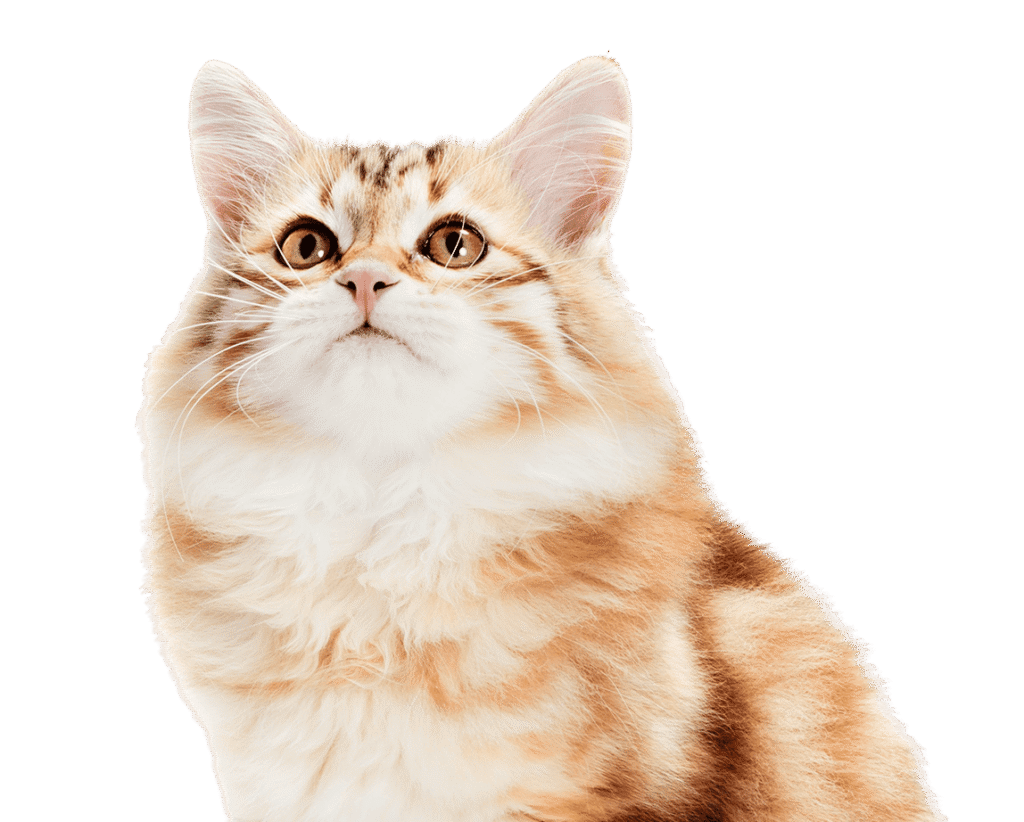
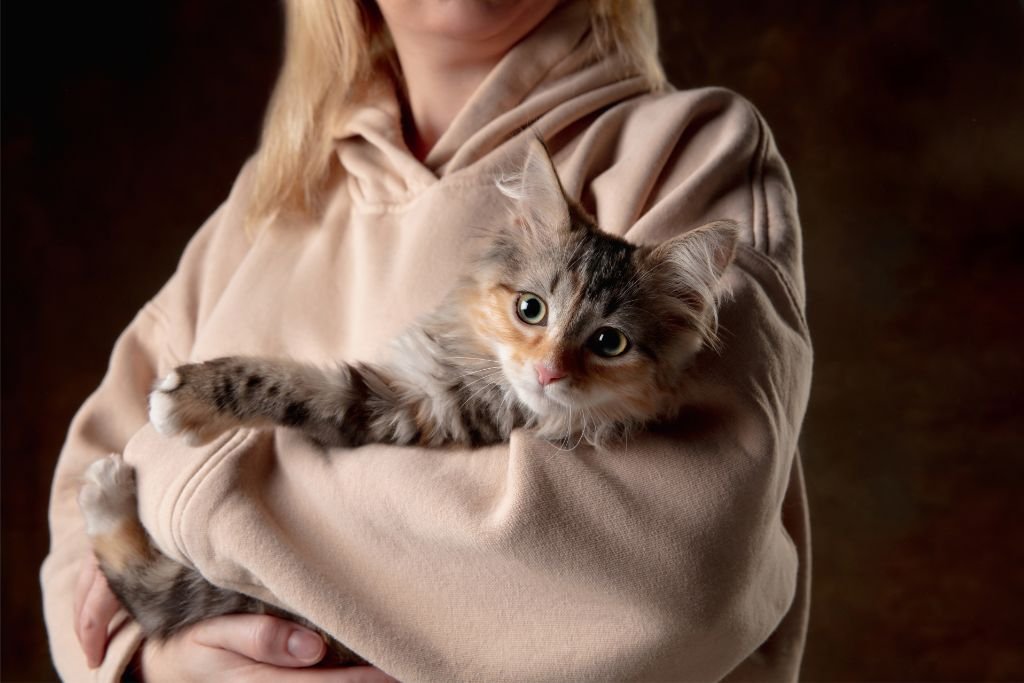
Maine Coons are unique in both size and appearance, but also in the grooming, nutrition, exercise, and emotional considerations that must be made when owning this breed. The semi-water-resistant coats that most cats don’t have will actually require brushing to reduce that shedding. Due to their large muscle mass, they will also require a diet that is both balanced and protein dense to keep weight consistent and muscles strong. Maine Coons are different from many other cats in that they are very intelligent and social, even playful. This means daily interactions and exercises are a must to keep them happy.
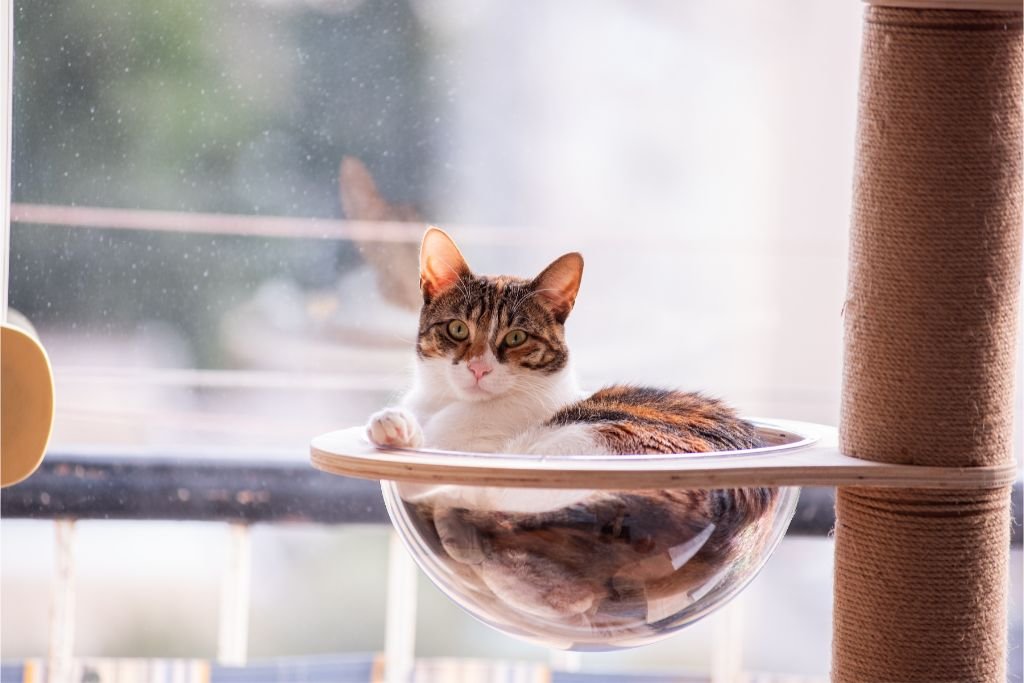
Maine Coons are large and very active, and will require large spaces and furniture to climb on, and things to keep them busy. They are called gentle giants because they are both affectionate and friendly. That being said, they are social and will require a lot of attention. Without that attention, boredom will translate to stress.
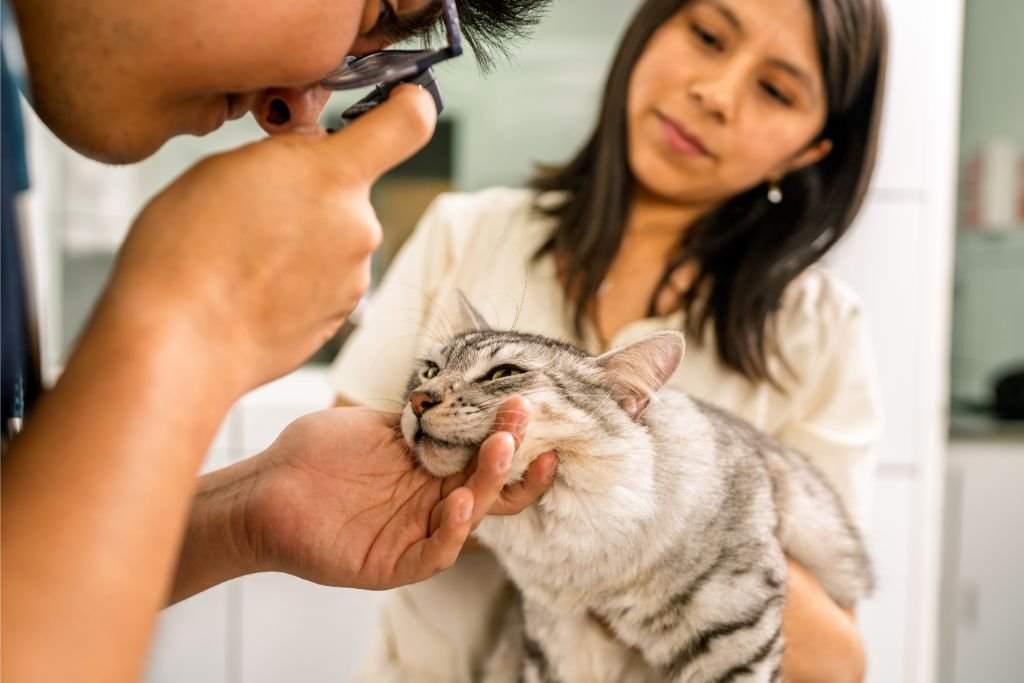
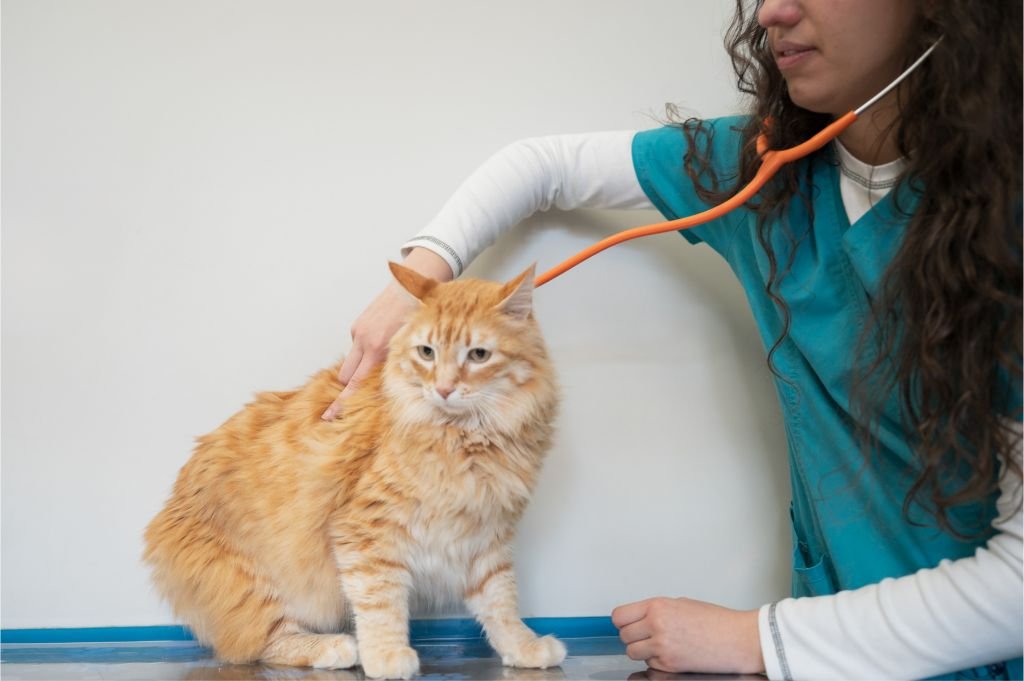
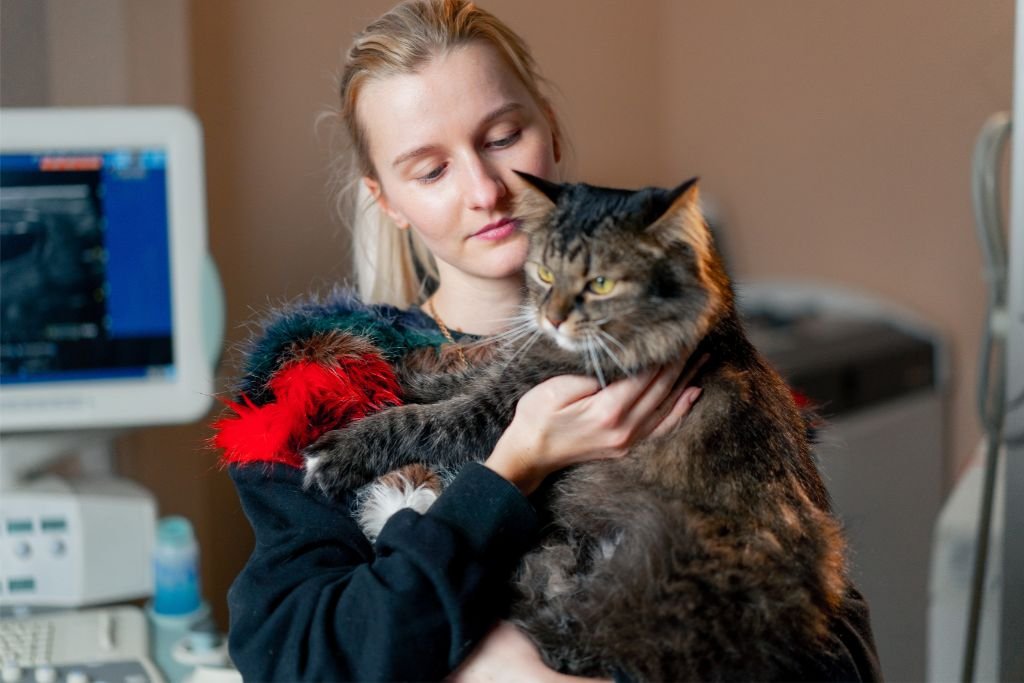
Maine Coons, due to genetics, will also have health issues down the line. Some of the health issues are congenital and are due to their breed, such as the hypertrophic cardiomyopathy and hip dysplasia. Routine check ups and preventative health monitoring are a must for ownership.
Care Essentials for Your Cat
Maine Coon Care Pillars

Nutrition & Diet Management
Maine Coons, being large with a lot of muscle, can really suffer from a low protein diet. Weakness, obesity, and suffering from a number of health issues can be the result of feeding low quality foods.
Diets containing fillers such as corn, soy, artificial additives can lead to poor health. It’s better to feed a Maine Coons that contains animal proteins like chicken, turkey, and fish.
Kittens are typically fed more meals or snacks throughout the day to accommodate their rapid growth. Adult Maine Coons do well with two to three meals in the day. Maine Coons can overeat, so gradually increase their portions.
Fresh water should always be available, and many Maine Coons prefer running water, so a pet water fountain can be beneficial.

Grooming & Coat Maintenance
Maine Coons have a long, thick, and semi water resistant coat that requires consistent grooming. While their fur is less prone to matting than some long-haired breeds, neglect can still lead to knots and discomfort.
These knots can lead to discomfort. This can all be avoided by being proactive. Being proactive can be taking the time to brush more three to four times a week with a slicker or flexi brush.
Maine Coons do need regular nail trims. A good time frame is two to three weeks. Don’t forget about their ears. Check their ears once a week to make sure there is not a lot of buildup. Lastly, don’t forget to give them a bath to help with cleanliness and their coat.

Exercise & Physical Activity
Maine Coons need a lot of space to roam and play so they can stay active and in good shape. Interactive playtime can be done with play mice, ropes, and climbing toys.
Maine Coons need to be able to climb, so you should provide a climbing tree and other vertical and extra play space.
Without proper exercise, Maine Coons may become overweight or develop behavioural problems such as scratching furniture or excessive vocalization.

4. Health Care and Routine Checkups
Maine Coons are generally strong and healthy but can be genetically prone to some sicknesses like: Hypertrophic cardiomyopathy and other joint and muscular problems. Routine check ups can help these problems be caught in the early stages and daily vaccines can help these problems as well.
Maintaining a healthy weight is especially important, as excess weight can worsen joint and heart issues.
Maine Coon Health Essentials
Common Maine Coon Health Issues and Preventions
Maine Coons are predisposed to certain genetic conditions that owners should be aware of.
Hypertrophic cardiomyopathy is one of the most common and serious conditions affecting this breed. Hip dysplasia can also occur due to their large size, affecting mobility over time.
Early detection through regular vet visits can significantly improve your cat’s quality of life.
❤️ Hypertrophic Cardiomyopathy (HCM)
🟥🟥🟥🟥🟥🟥🟥⬜⬜⬜
Moderate–High Risk
A genetic heart disease where the heart muscle thickens, making it harder to pump blood.
⚠️ Symptoms
- Rapid or labored breathing
- Lethargy (low energy)
- Sudden collapse in severe cases
- Weakness in hind legs
🛡️ Preventions
- Regular vet checkups (heart screening)
- Choose cats from responsible breeders
- Maintain healthy weight
- Early diagnosis through echocardiogram
Important: This is the MOST serious and common Maine Coon condition.
🧪 Polycystic Kidney Disease (PKD)
🟥🟥🟥⬜⬜⬜⬜⬜⬜⬜
Low Risk
A genetic condition where cysts form in the kidneys.
⚠️ Symptoms
- Increased thirst
- Frequent urination
- Weight loss
- Vomiting
🛡️ Preventions
- Genetic testing
- Regular vet monitoring
- Early diagnosis
Important: This is the MOST serious and common Maine Coon condition.
🧬 Spinal Muscular Atrophy (SMA)
🟥🟥🟥🟥⬜⬜⬜⬜⬜⬜
Low–Moderate Risk
A genetic condition affecting spinal muscles, leading to weakness.
⚠️ Symptoms
- Weak hind legs
- Wobbly walking
- Muscle loss
- Poor coordination
🛡️ Preventions
- Genetic screening before breeding
- Safe indoor environment
- Avoid high-risk physical stress
Good news: It’s not painful, and cats can live normal lives with care
⚖️ Obesity
🟥🟥🟥🟥🟥🟥🟥🟥🟥⬜
High Risk
Excess body weight due to overfeeding and lack of exercise.
⚠️ Symptoms
- Visible fat buildup
- Low activity
- Difficulty moving
- Breathing issues
🛡️ Preventions
- Controlled portion feeding
- Daily exercise (20–30 minutes)
- Avoid free feeding
- Monitor weight regularly
Important: This is one of the most preventable conditions
🦴 Hip Dysplasia
🟥🟥🟥🟥🟥🟥⬜⬜⬜⬜
Moderate Risk
A joint condition where the hip socket doesn’t form properly, causing pain and mobility issues.
⚠️ Symptoms
- Difficulty jumping
- Limping or stiffness
- Reduced activity
- Pain when moving
🛡️ Preventions
- Maintain healthy weight (very important)
- Provide soft bedding
- Avoid excessive jumping in kittens
- Regular vet evaluation
Important: This is the MOST serious and common Maine Coon condition.
🦷 Dental Disease
🟥🟥🟥🟥🟥🟥🟥⬜⬜⬜
Moderate–High Risk
Plaque and tartar buildup leading to gum infections and tooth loss.
⚠️ Symptoms
- Bad breath
- Red or swollen gums
- Difficulty eating
- Drooling
🛡️ Preventions
- Regular teeth cleaning
- Dental treats or toys
- Vet dental checkups
- Dry food (helps reduce plaque slightly)
Important: This is the MOST serious and common Maine Coon condition.
MAINE COON CARE STAGES

Care By Life Stage
Customized care instructions for each life stage of your Maine Coon, from a Bubbly Kitten to a Wise Senior.
Maine Coon Kittens
(0–12 Months)
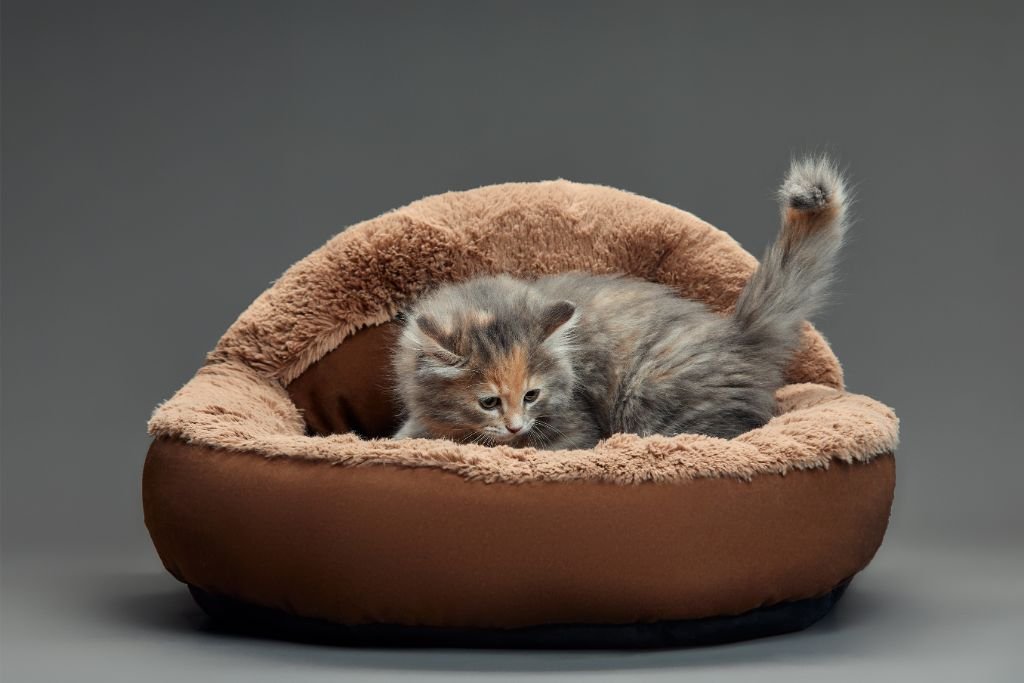
- High-protein diet
- Small, frequent meals
- Early grooming and brushing habits
- Safe play to build strength
- Litter training with large boxes
- Regular vet visits and vaccinations
- Social bonding and gentle handling
Adult Maine Coons
(1–7 Years)
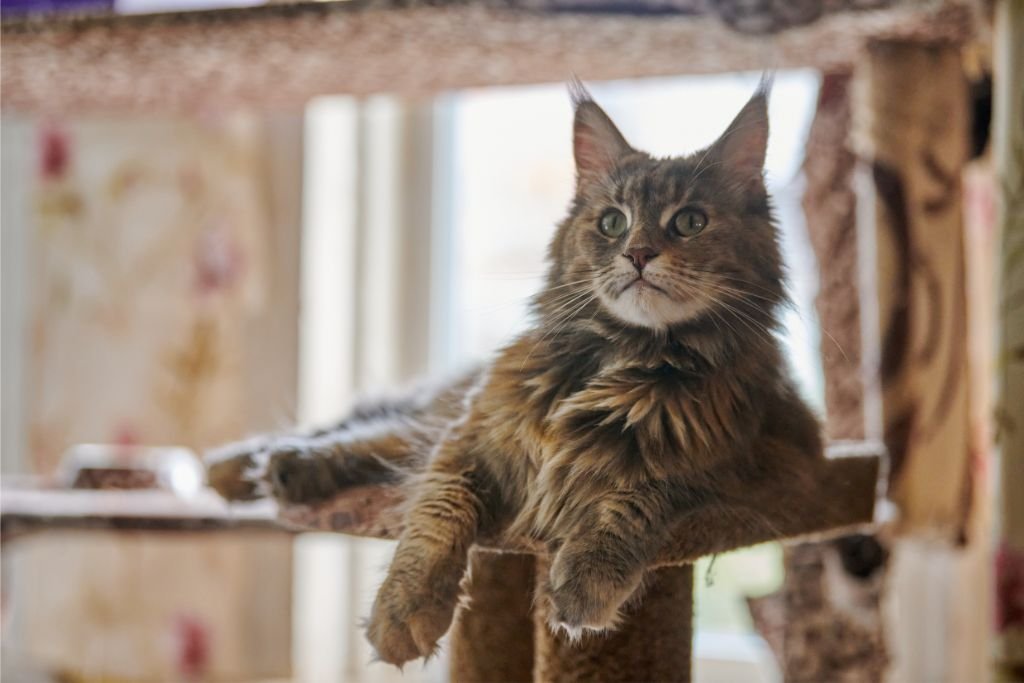
- Balanced diet with controlled portions
- Consistent feeding schedule
- Regular brushing to prevent matting
- Daily play for muscle and joint health
- Mental stimulation through toys
- Routine health monitoring
- Comfortable sleeping and resting areas
Senior Maine Coons
(7+ Years)
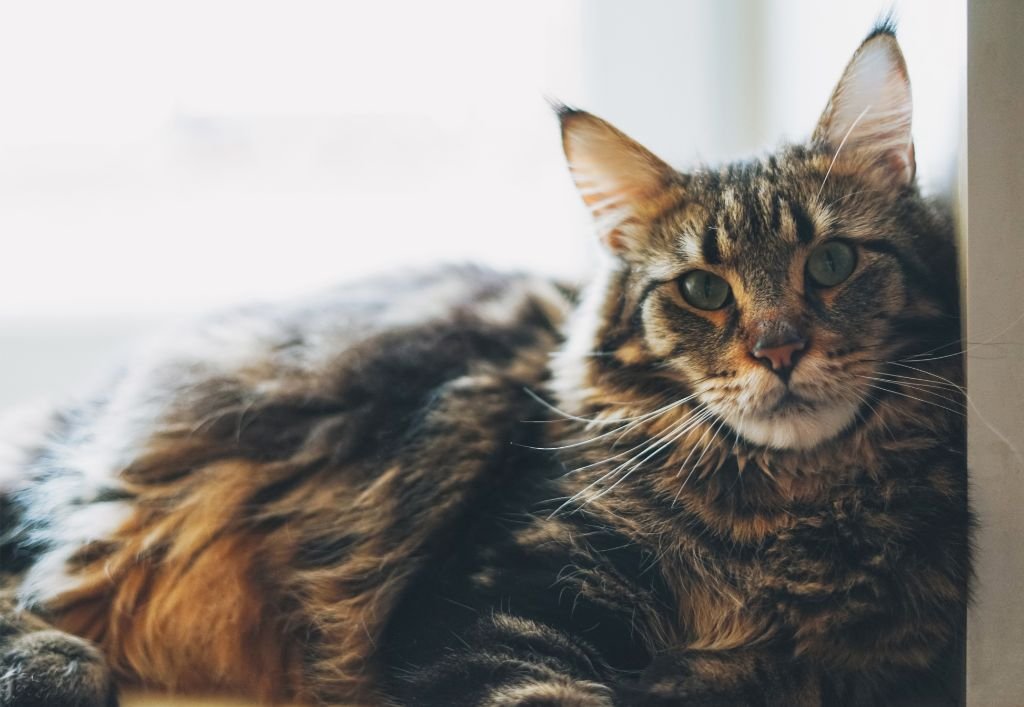
- Diet adjusted for aging and metabolism
- Joint and mobility support focus
- Short, gentle play sessions
- More frequent grooming assistance
- Regular vet checkups and screenings
- Comfortable, warm resting spaces
- Close monitoring of behavior changes

Essential Care for your Maine Coon
Exercise & Mental Stimulation
Maine Coon Exercise Needs by Age
| Age Stage | Energy Level | Recommended Exercise Time | Best Activities | Main Benefits |
|---|---|---|---|---|
Kitten (2–12 Months) | 🟧🟧🟧🟧🟧🟧🟧🟧🟧🟧 Very High | 30–60 mins daily (short sessions) | Feather toys, chasing games, climbing, tunnels | Supports growth, coordination, and muscle development |
Young Adult (1–3 Years) | 🟧🟧🟧🟧🟧🟧🟧🟧🟧⬜ HighHigh | 30–45 mins daily | Interactive play, jumping, cat trees, puzzle toys | Burns energy and prevents destructive behavior |
Adult (4–7 Years) | 🟧🟧🟧🟧🟧🟧🟧⬜⬜⬜ Moderate–High | 20–30 mins daily | Climbing, laser play, interactive toys | Maintains healthy weight and muscle strength |
Mature Adult (8–10 Years) | 🟧🟧🟧🟧🟧🟧⬜⬜⬜⬜ Moderate | 15–25 mins daily | Gentle play, scratching posts, short climbing sessions | Supports joint mobility and reduces inactivity |
Senior (11+ Years) | 🟧🟧🟧🟧⬜⬜⬜⬜⬜⬜ Low-Moderate | 10–20 mins daily | Light play, slow interactive toys, short walks | Helps maintain flexibility and mental stimulation |
Maine Coon Mental Stimulation Needs by Age
| Age Stage | Mental Stimulation Need | Recommended Activities | Why It Matters |
|---|---|---|---|
Kitten (2–12 Months) | 🟧🟧🟧🟧🟧🟧🟧🟧🟧🟧 Very High | Exploration, puzzle toys, social play | Helps brain development and learning |
Young Adult (1–3 Years) | 🟧🟧🟧🟧🟧🟧🟧🟧🟧⬜ High | Hunting games, climbing, toy rotation | Prevents boredom and hyperactivity |
Adult (4–7 Years) | 🟧🟧🟧🟧🟧🟧🟧🟧🟧⬜ High | Puzzle feeders, interactive toys, training | Keeps the mind active and reduces stress |
Mature Adult (8–10 Years) | 🟧🟧🟧🟧🟧🟧⬜⬜⬜⬜ Moderate | Gentle exploration, treat puzzles | Prevents mental decline and boredom |
Senior (11+ Years) | 🟧🟧🟧🟧🟧🟧⬜⬜⬜⬜ Moderate | Slow puzzle games, light interaction | Supports cognitive health and emotional comfort |
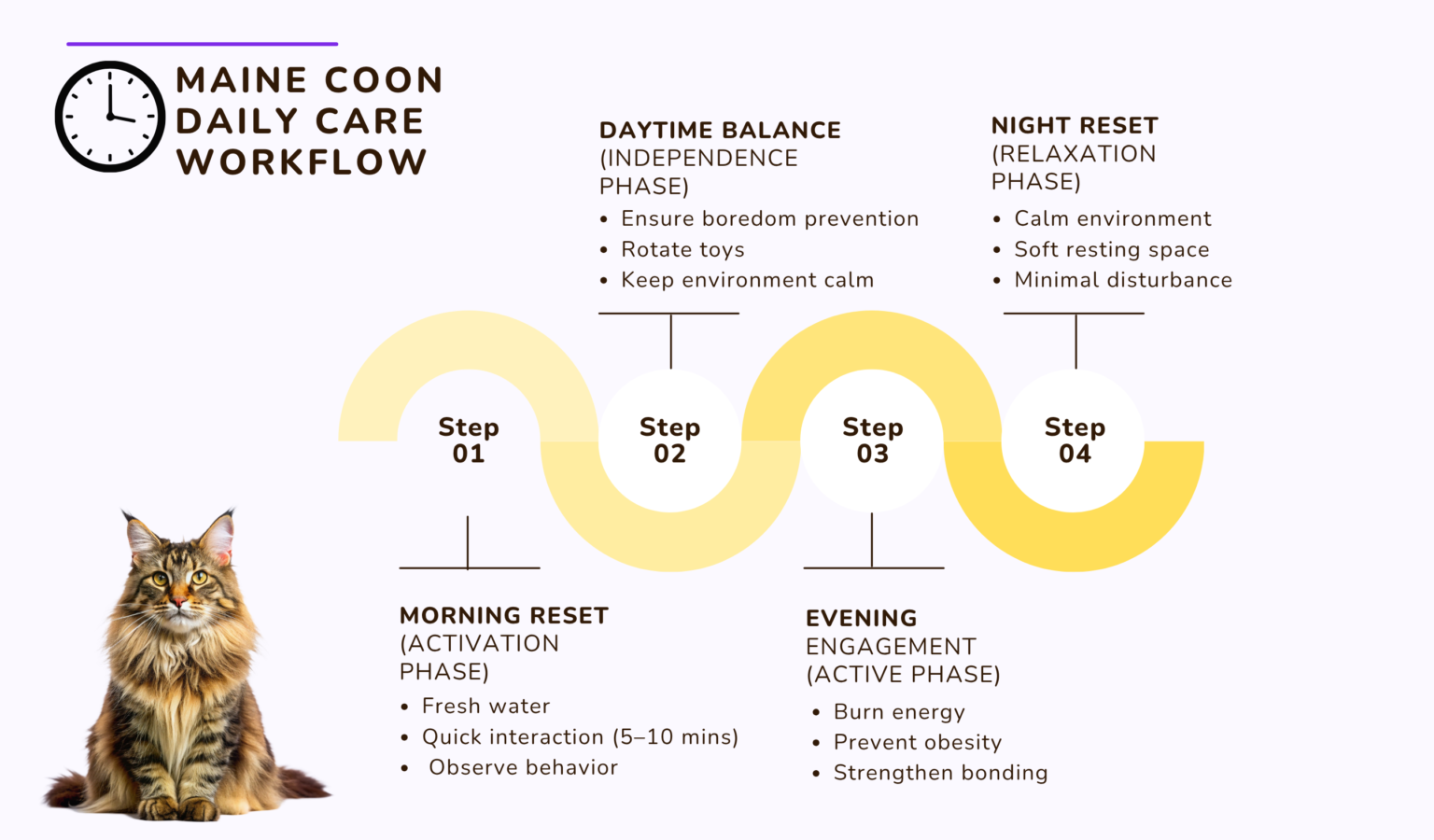
Common Maine Coon Care Mistakes
Even owners with the best intentions can make mistakes when taking care of a Maine Coon. If these mistakes are identified and understood, it can be helpful in avoiding potential issues in the future.
Yes, Maine Coons are big, but that doesn’t mean they need unlimited food. Obesity, joint strain, and heart problems can occur, and are all serious issues. Ensure that there is portion control and proper nutrition.
Their long and thick coats can lead to a number of issues if not properly maintained. Mats, skin issues, and excess shedding are some of the issues that can occur. Regular grooming can also help you spot skin issues early on.
Maine Coons often use litter boxes, scratching posts, and beds that are not up to their standards. Small or inappropriate equipment can lead to stress, discomfort, and poor litter box habits.
The Maine Coons are very social, and they also need a lot of stimulation. If there needs are not met, then there can be issues like destructive behaviors, boredom, and anxiety.
Making sure you take your Maine Coon to the vet is very important. Unless you notice a behavior change, you should still be routinely taking your Maine Coon to visit the vet. If you need to take them to the vet, make sure to go early.
Make sure you are not comparing Maine Coons to the rest of the cats. Since they are such big cats, their needs for their big size and their social needs should be detained.
Essential Care for your Maine Coon
Essential Care Tools
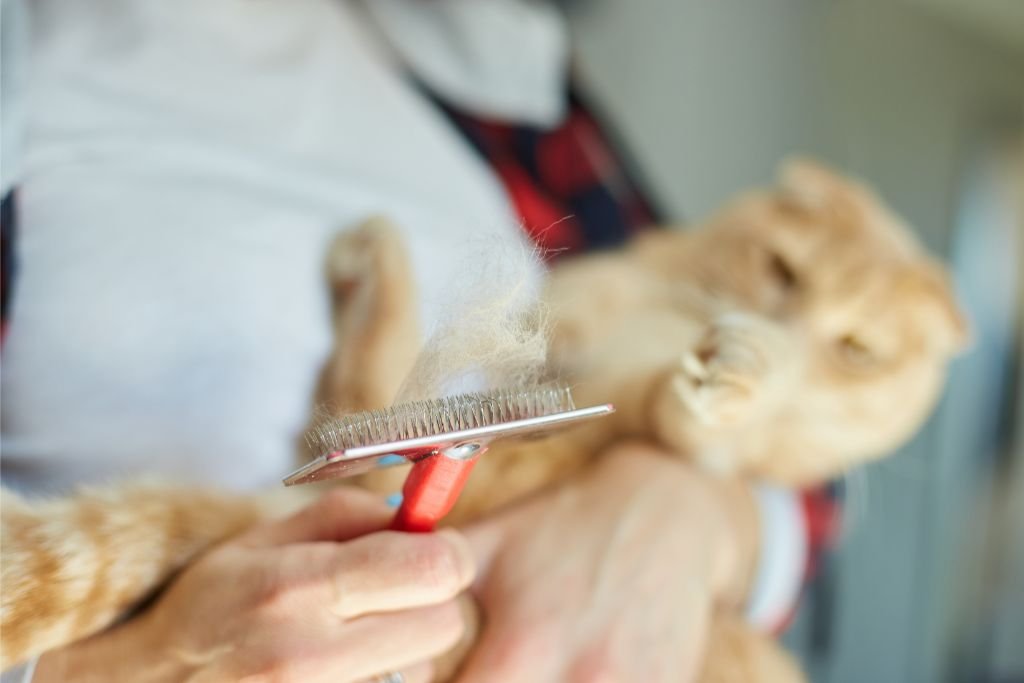
Grooming Brushes & Combs
Expertly crafted to smooth dense coats, avoid tangles, and lessen shedding.
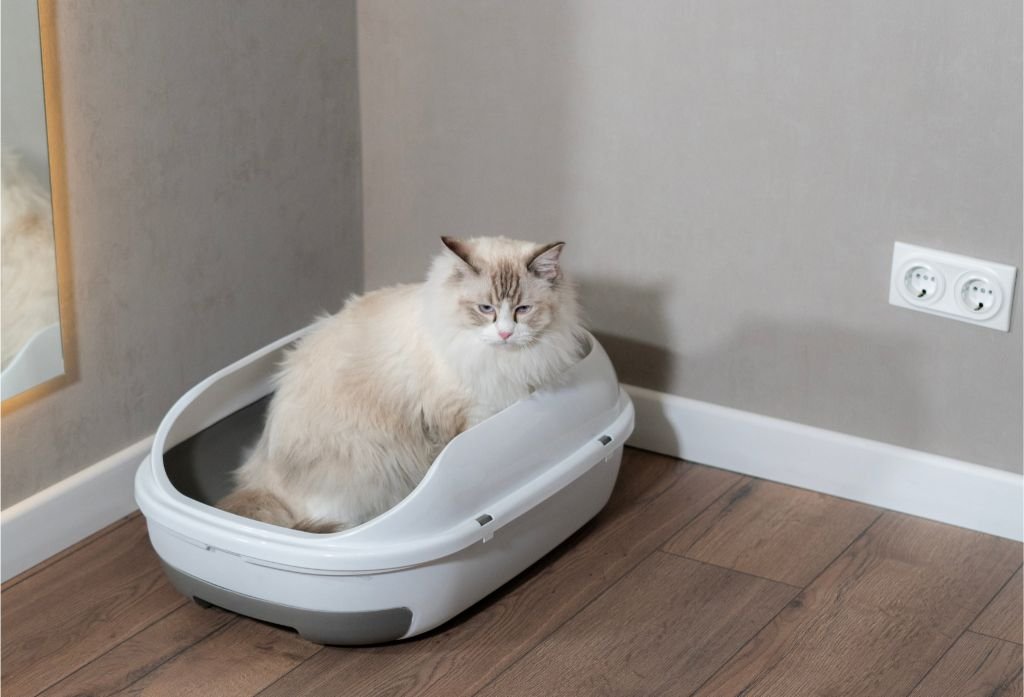
Large Litter Boxes
More room means better posture, and less mess.
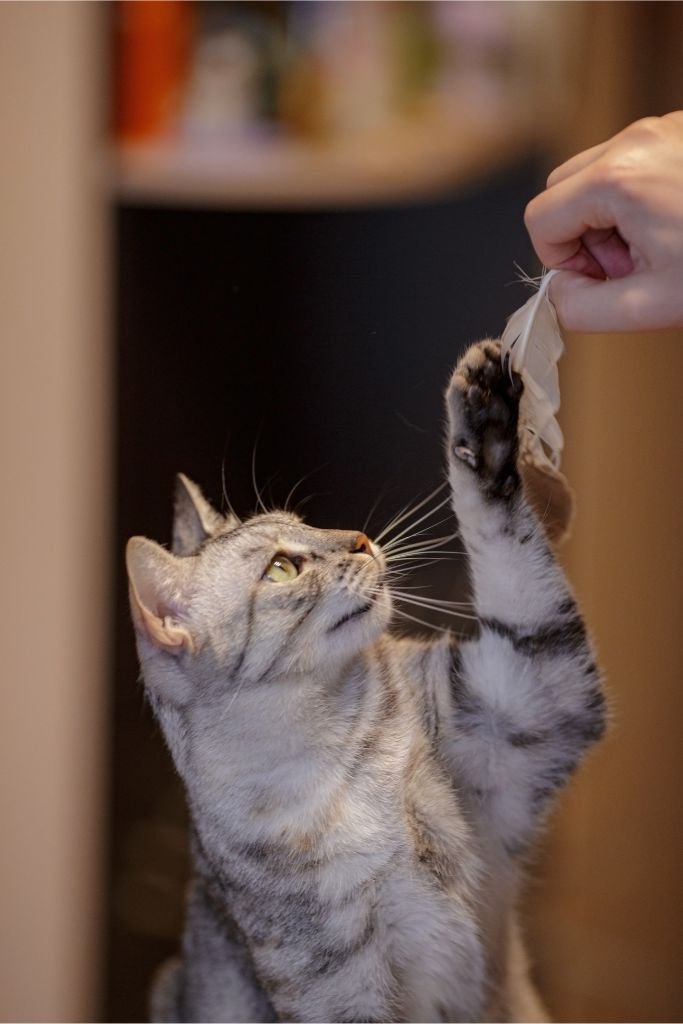
Interactive Toys
Promote mental stimulating play and daily exercise.
Elevated Food & Water Bowls
Optimize feeding posture and reduce strain on joints.
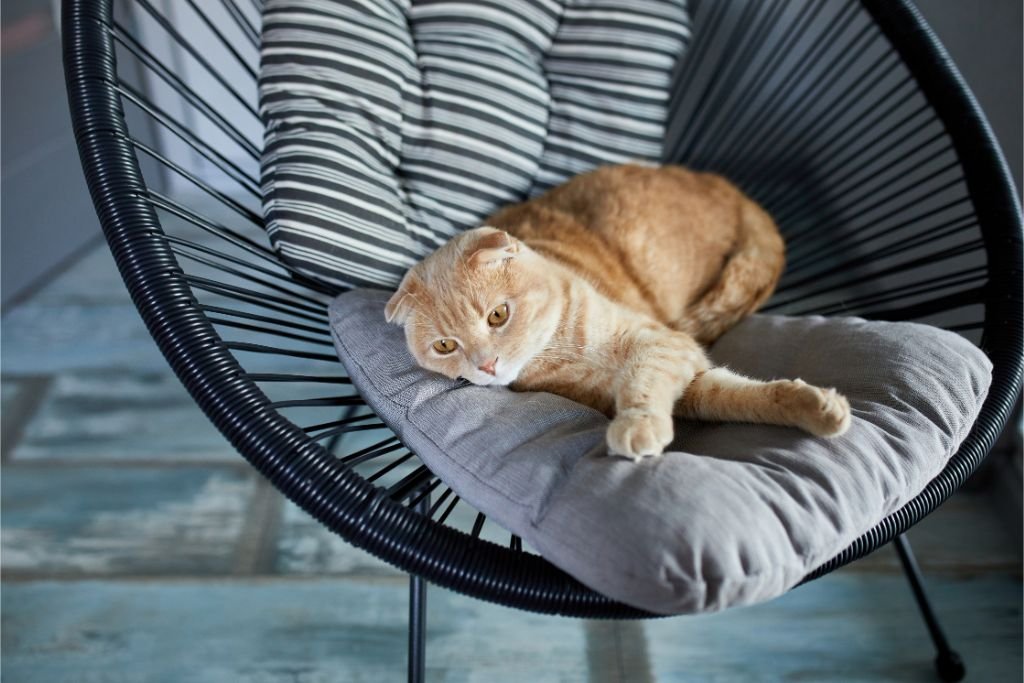
Spacious Beds
Provide adequate support and rest for larger cats.
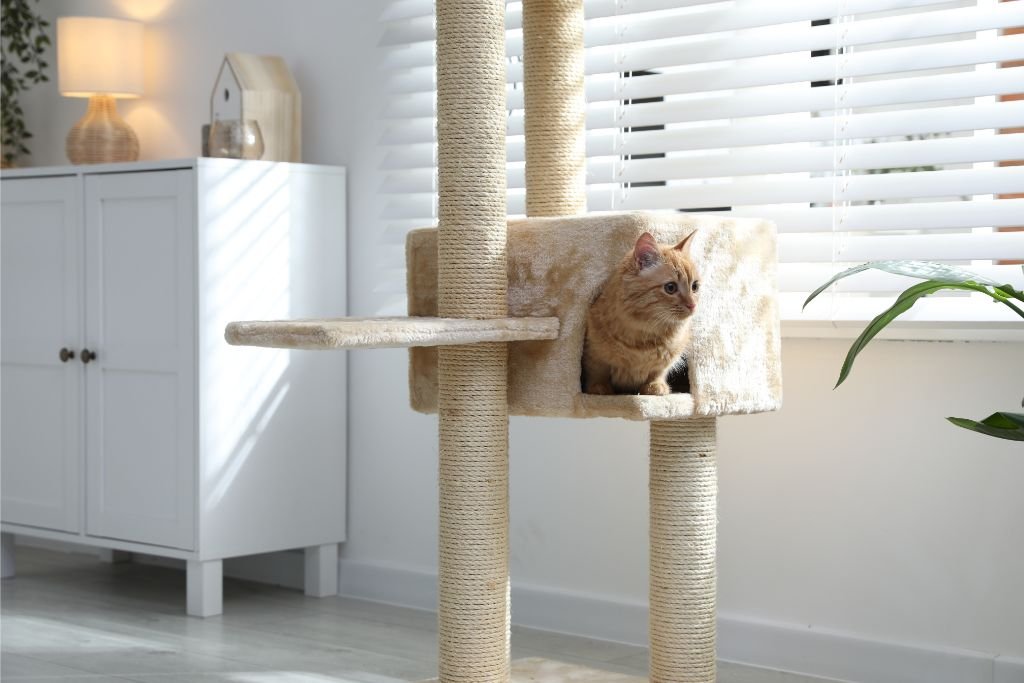
Cat Trees & Climbing Towers
Encourage vertical movement and exercise with natural climbing instincts.
Why Us?

Why Trust CoonAura?
The needs of Maine Coon cats are the sole focus of CoonAura. We don’t provide general pet advice; rather, each resource, recommendation, and guide is made with this particular breed in mind. Because we specialize in Maine Coons, we are able to offer owners who wish to give their cats the best care possible more precise and pertinent advice.
Our content is created using expert insights, breed-specific research, and firsthand accounts from Maine Coon owners. To make sure our recommendations are useful, accurate, and practical, we thoroughly examine publicly available data, product specifications, and customer feedback.
Safety, comfort, quality, and value are our top priorities when making product recommendations. Our goal is always to assist you in making confident, well-informed decisions for your Maine Coon, and affiliate relationships never affect our opinions.
CoonAura’s mission is to encourage responsible pet ownership by providing honest education, openness, and care-first advice so you can concentrate on creating a happy, healthy life with your cat.
QUESTIONS
Popular FAQs
Expert-reviewed answers to frequently asked Maine Coon care questions, designed to save time, reduce mistakes, and support long-term feline wellness.
Maine Coons should be brushed two to three times a week to avoid matting and shedding. When shedding season occurs, daily brushing is beneficial. Grooming allows owners to examine their skin, coat, and identify potential parasites.
Maine Coons do not need a prescribed diet, but do need to be monitored as their sizes require high protein foods. Maine Coons also need controlled portions to avoid obesity.
Maine Coons are indoor cats, and they adapt to indoor spaces when there is enough room, interaction, and enrichment. Keeping your Maine Coon stimulated can be aided with interactive toys,* cat* trees, and window perches.
Maine Coons are among the biggest domestic cat breeds with adult males weighing between 13 and 18 pounds. A smaller weight class is designated to females. Maine Coons can grow larger than the typical size due to diet and genetics.
All breeds of cats possess the possibility of having certain health problems. Maine Coons may be prone to problems like HCM (hypertrophic cardiomyopathy) and hip dysplasia. These risks can be managed with regular veterinary checkups and early monitoring.
© 2025 CoonAura.com | Affiliate Disclosure Included