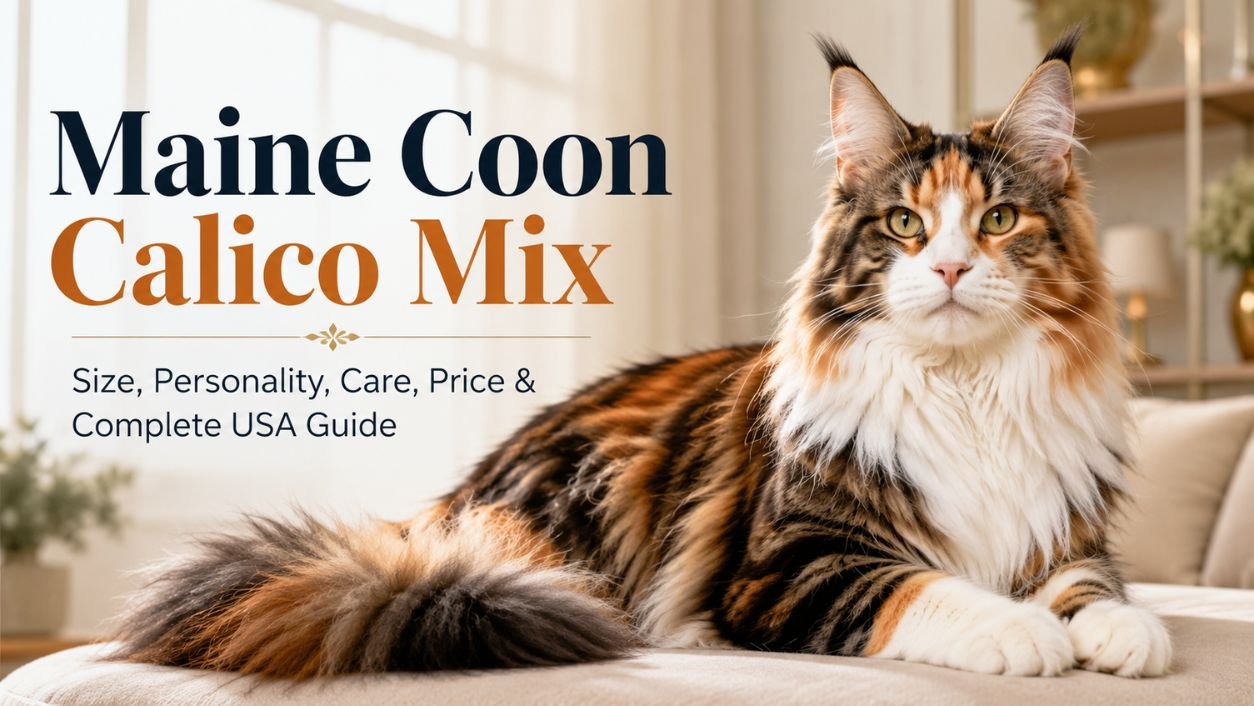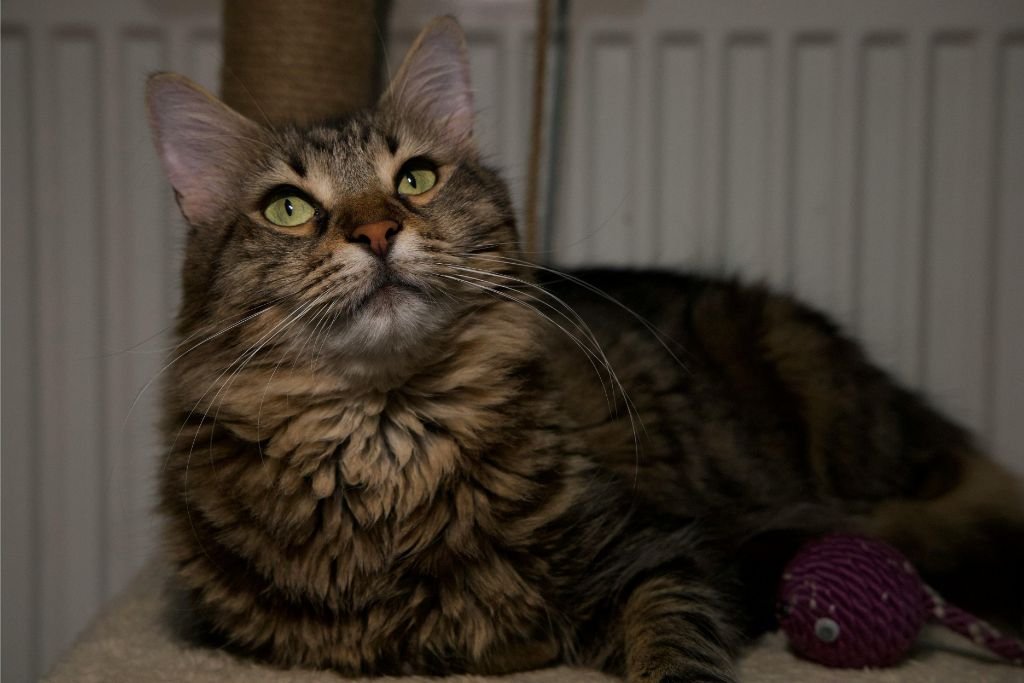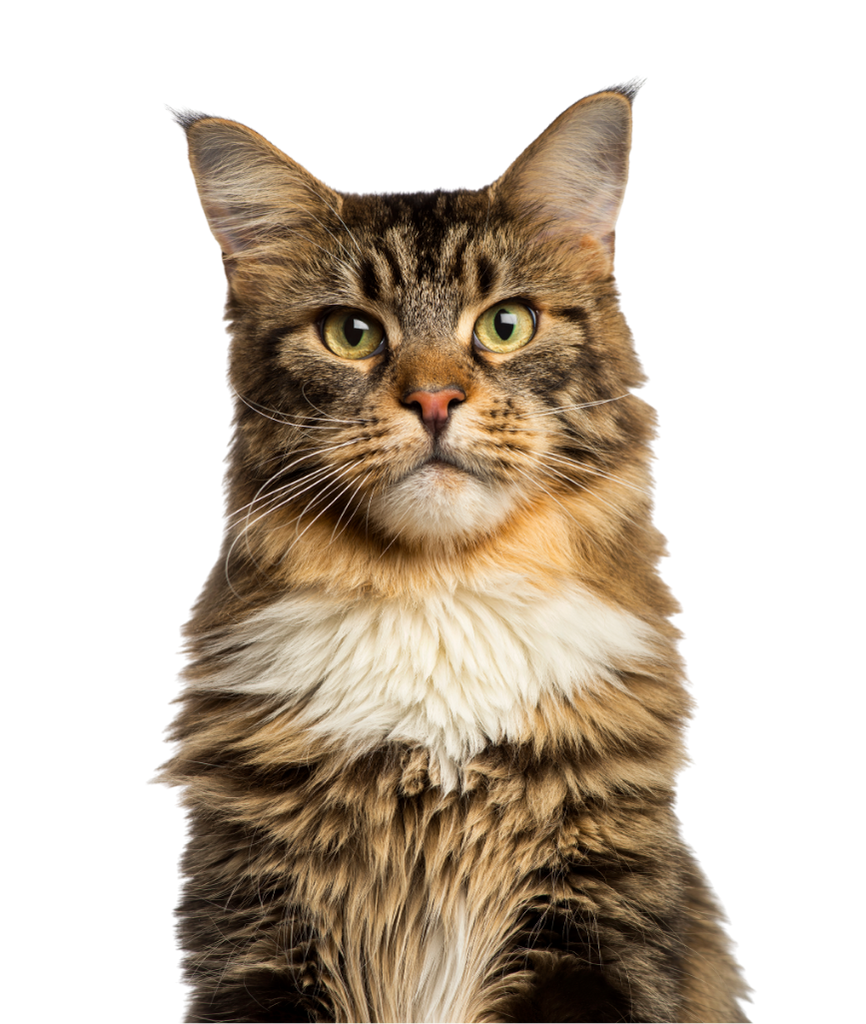
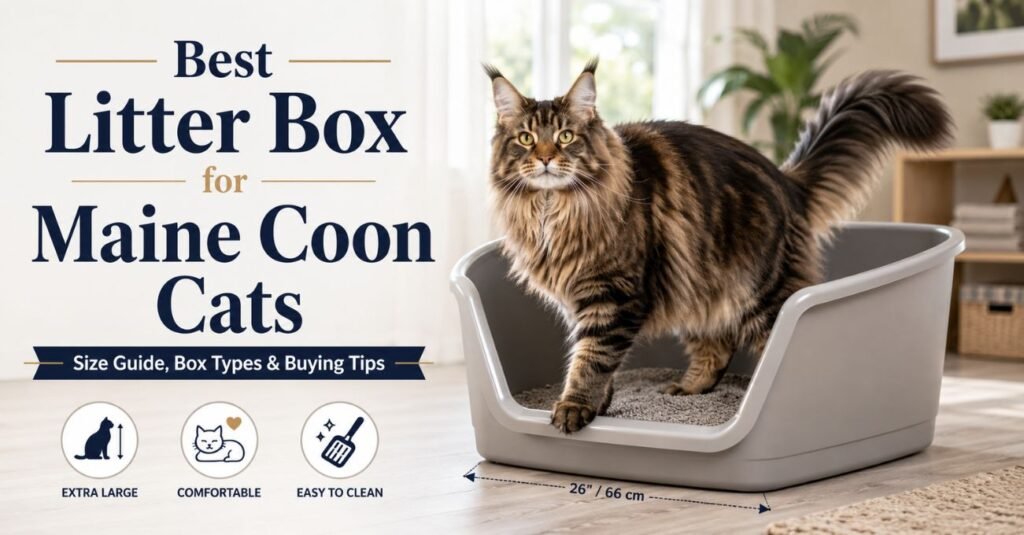
The best litter box for a Maine Coon is an extra-large open or high-sided box with enough interior space for the cat to enter, turn, dig, squat, and cover waste without touching the walls. Many adult Maine Coons need a box around 24 inches or longer, while very large males may need 28 inches or more.
Maine Coons have longer bodies, heavier frames, and larger paws than many domestic cats. A standard litter tray can force a large cat to crouch, hang over the edge, or avoid the box. Box size, entry height, side height, and cleaning access all affect comfort. A litter box is only one part of daily Maine Coon Care, so owners should also think about grooming, feeding, furniture, and space together.
Pull Quote: “Litter boxes should be as spacious as the cats using them.”
Introduction: Why Maine Coons Need a Bigger Litter Box
Maine Coons are one of the largest non-hybrid domestic cat breeds, being longer, wider, and heavier than most cats. A box that advertises “large” dimensions probably isn’t actually spacious enough for a full grown male Maine Coon. Depending on the male, they could reach quite the size. A small litter box means a lot of stress for the Maine Coons. PetMD explains that adult male Maine Coons can reach up to 25 pounds, which is why a full-size litter box matters more for this breed than it does for many average house cats.
Comfort matters because cats build habits around safety and cleanliness. If your Maine Coon feels trapped, crowded, or unstable, the box may become a problem area. This is why the best litter box for Maine Coon homes should feel roomy from the inside. It should also be easy for you to clean because a dirty box increases odour and may reduce litter box acceptance.
Editorial note: This guide focuses on litter box size, entry height, side height, material, odour control, and cleaning access for Maine Coon cats. A veterinary professional or feline behaviour specialist should review medical claims related to urination, litter box avoidance, mobility issues, and sudden behaviour changes.
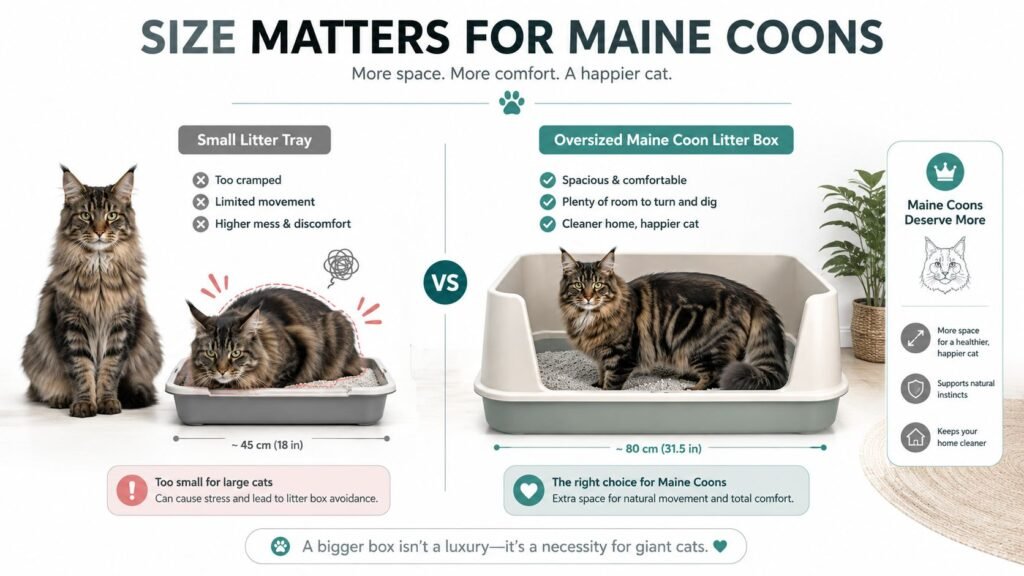
Common Problems with Small Litter Boxes
When the box is too small, a cat can’t dig the waste down the way nature intended and waste ends up near the edge. That’s just the start. The litter gets kicked out and then all of the nasty smells fill the box. Smaller boxes can even make a Maine Coon feel less safe and make them want to avoid the box. Maine Coons aren’t the kind of animal you can keep in a cramped small space, like most apartments in the USA. Having one Maine Coon means having a lot of litter everywhere.
| Problem | What It Looks Like | What It Usually Means |
|---|---|---|
| Body hangs outside | Cat enters but does not fit fully | Box is too short or narrow |
| Litter everywhere | Strong digging throws litter out | Sides are too low |
| Waste near the edge | Cat cannot turn well | Interior space is limited |
| Cat avoids covered box | Cat enters once, then quits | Hood may feel cramped |
| Strong odor | Smell stays even after scooping | Material or airflow is poor |
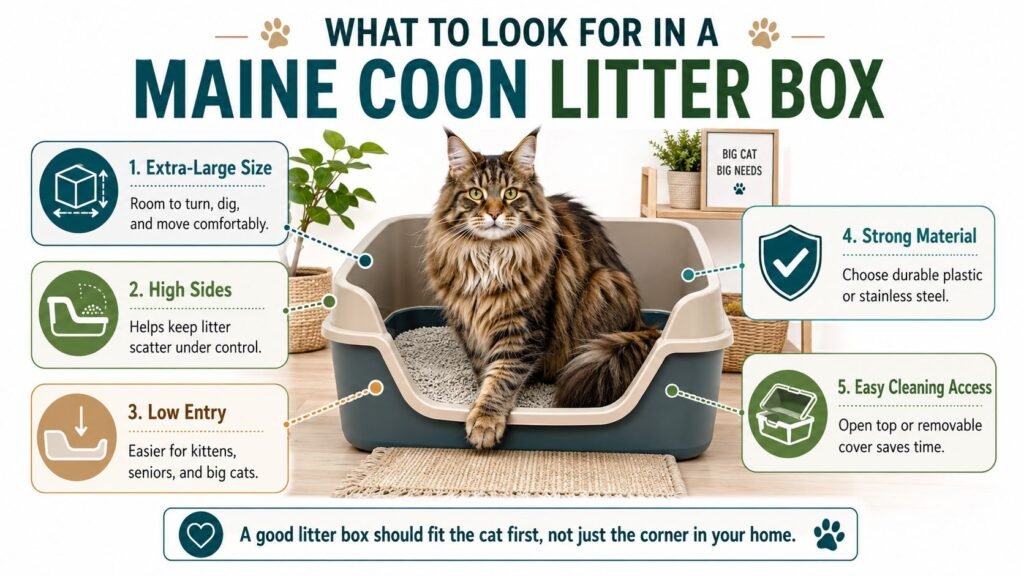
Key Features to Look for in the Best Litter Box for Maine Coon Cats
When shopping for Maine Coon Cat litter boxes, start measuring dimensions. An attractive litter box that is poorly sized is still an unattractive choice. Maine Coon Cat litter boxes need to be large enough to allow movement for the cat, spacious enough to allow the cat to turn, tall enough to minimize litter scatter, and wide enough for the cat to enter comfortably.
Consider how easy the box will be to clean. Maine Coons tend to be large and therefore make larger, bulkier waste. Boxes that have a bulky hood, thick walls, or lots of corners will make daily scooping a lot harder. An easy to scoop and clean box will be much more likely to be kept clean. Your cat will silently thank you.
| Feature | Why It Matters | What to Look For |
|---|---|---|
| Interior length | Lets the cat turn and dig | Extra-large size, often 24 inches or more |
| Interior width | Prevents cramped posture | Wide floor space, not just tall walls |
| Side height | Controls litter scatter | High sides with a practical entry |
| Entry height | Helps kittens and seniors | Lower front opening or walk-in design |
| Material | Affects odor and durability | Strong plastic or stainless steel |
| Cleaning access | Saves daily effort | Open top or removable cover |
| Odor control | Keeps home fresher | Cleanable surface and airflow |
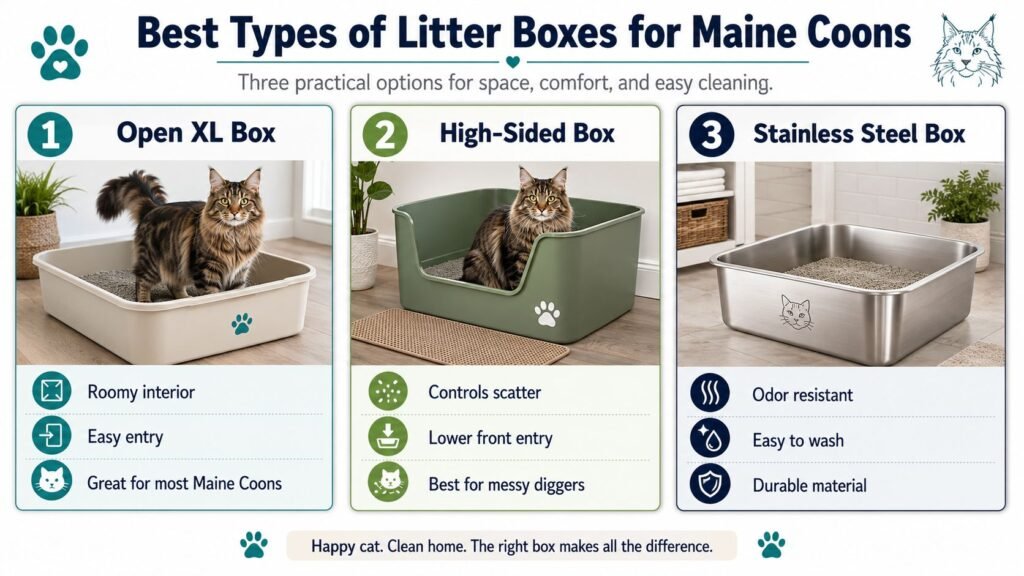
Best Types of Litter Boxes for Maine Coons
Homes come with different setups. A huge open box might be fine for a single Maine Coon in a quiet suburban house. A high-sided box might be better for a Maine Coon that digs and for the owner that lives in the apartment. The box that you pick ultimately comes down to your Maine Coon’s habits and how often you’re willing to clean.
The best litter box for Maine Coon owners is usually not the fanciest one. It is the one your cat uses every day without stress. That means real space, stable walls, safe entry, and easy cleaning. A box can look boring and still be perfect. Cats are not shopping for luxury branding. The same logic applies to other large-cat products: function matters more than appearance, especially when choosing furniture like a cat tree for large cats.
| Litter Box Type | Best For | Main Benefit | Main Warning |
|---|---|---|---|
| Extra-large open box | Most Maine Coons | Roomy and easy to clean | More visible in the room |
| High-sided box | Messy diggers | Controls scatter better | Entry must not be too high |
| Stainless steel box | Odor-sensitive homes | Resists smell and stains | May cost more |
| Covered box | Privacy and visual hiding | Contains some mess | Often too cramped |
| Top-entry box | Tracking control | Reduces scatter | Not ideal for seniors |
| Automatic box | Busy owners | Less daily scooping | Many are too small inside |
Stainless Steel Litter Boxes
Stainless steel boxes show up and help combat odors like plastic boxes do because they are not smell absorbent and easy to clean. In small bathroom or apartment homes, they may be a good option.
Replacing a litter box still requires daily scooping and cleaning, and some cats may be sensitive to the sound of claws on metal. For these cats, put familiar litter in the box and place it near the old box while doing the switch.
Covered Litter Boxes for Large Maine Coons
Covered litter boxes can look neat in a living space, but Maine Coons often need more room than the hood allows. Litter boxes can be wide on the outside, and because of a curved lid, can be cramped on the inside. That is the trap.
If you want a covered model, take note of internal height and doorway dimensions. Your cat shouldn’t have to duck to get in. The hood should easily come off for cleaning. Covered boxes can actually make poor airflow covered boxes smell worse.
Top-Entry Litter Boxes
Top-entry boxes can even help with litter tracking. This is enticing for cat owners struggling with litter on the floors. However, Maine Coons are large, and some may not like jumping into a covered box.
Top-entry boxes usually favor the young, agile cats. Not senior cats, not kittens, and not cats with joint issues. If your cat is hesitant to a box style, don’t use it. The cleanest box is a useless box if your cat won’t use it.
Automatic and Self-Cleaning Litter Boxes for Maine Coons
Automatic boxes save time, but can be an issue with smaller interiors for larger breeds. Many have sleek designs, but can be small for the cat. Maine Coons need adequate space to stand, turn, and orient themselves before the cleaning cycle is an issue.
Make sure to take the dimensions of every part into consideration, and take note of the safety features and weight limits. Read the reviews for large cats specifically, because a self cleaning box should make life easier for you, not your Maine Coon.
What Size Litter Box for a Maine Coon?
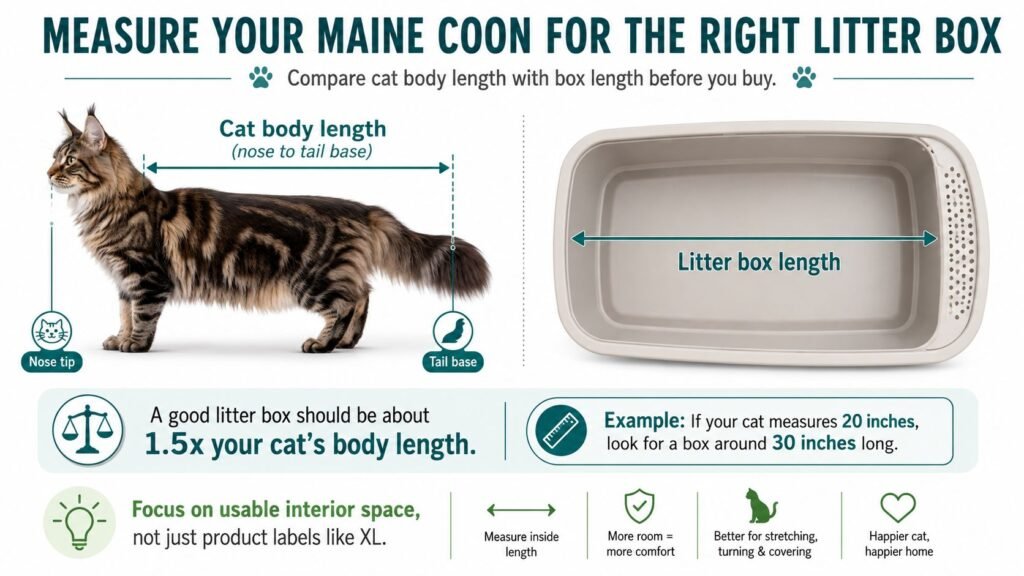
Size should be considered based on your Maine Coon, not the box label. For example, an “XL” litter box with a “XL” label, could be longer and slimmer, or taller and shorter. What is important is the usable space in the litter box. Your Maine Coon should be able to turn around in the box as well as cover up their business without stepping outside the box.
A good rule of thumb is to take your Maine Coon’s length measurement from the nose to the base of the tail and then multiply that measurement by 1.5 for the minimum length of the litter box. Maine Coons are a long breed of cats, so you may have to use a modified storage box with a cutout in the side to meet the length requirement.
| Maine Coon Size | Suggested Box Length | Suggested Box Width | Best Style |
|---|---|---|---|
| Kitten or young cat | 18–22 inches | 14–18 inches | Low-entry box |
| Small adult | 22–24 inches | 16–18 inches | Open XL box |
| Average adult | 24–28 inches | 18–22 inches | Open or high-sided XL |
| Large male | 28 inches or more | 20 inches or more | Oversized tray or modified bin |
| Senior cat | Large but easy entry | Wide floor space | Low-entry high-sided box |
Because Maine Coons are much larger than many common house cats, comparing breed size and body structure can help you understand why standard cat products often feel too small.
Best Litter Box Placement for Maine Coons
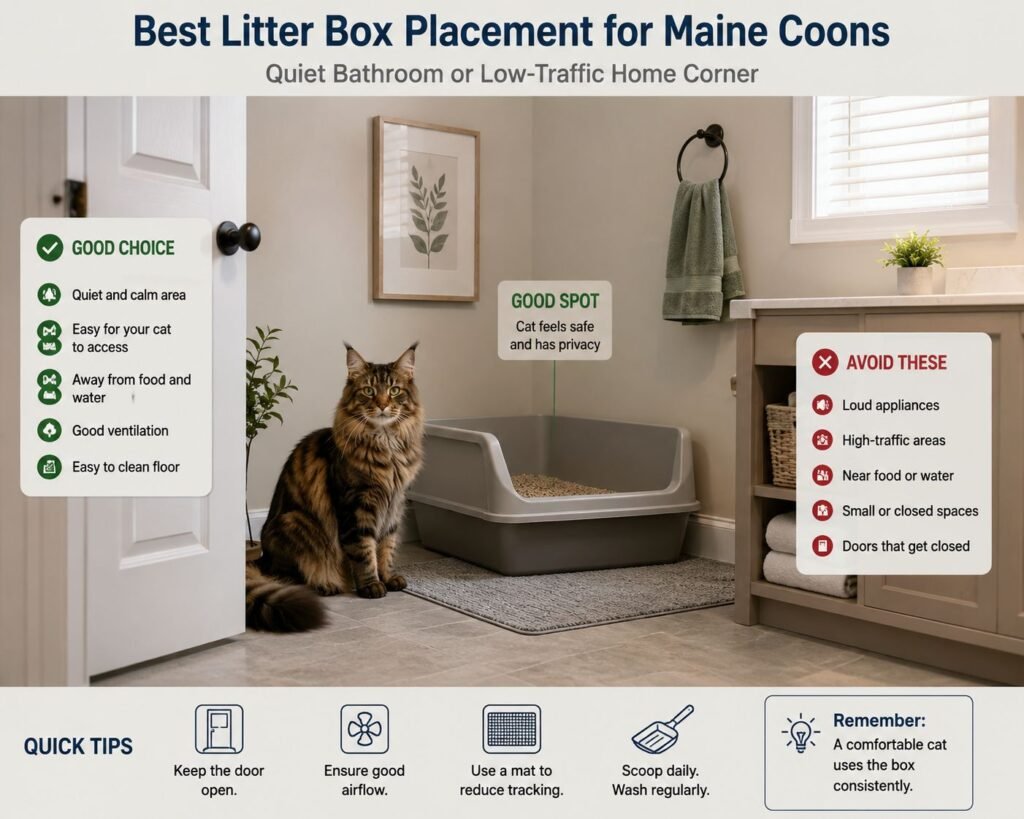
The best litter box can also be the worst if it is placed next to a loud appliance, or in a small closet. Maine Coons prefer quiet and accessible areas. They also prefer to be able to see any possible threats to them while they are vulnerable using the litter box. AAHA and AAFP guidance recommends placing litter boxes in quiet, accessible locations where cats can enter, leave, and avoid feeling trapped.
In USA homes, good places often include a spare bathroom, quiet laundry corner, mudroom, office corner, or low-traffic hallway nook. Bad places include garages with temperature swings, dark basements your cat avoids, and cabinets with poor airflow. A private location should still provide airflow, access, and enough turning space.
| Location | Why It Can Work | Watch Out For |
|---|---|---|
| Spare bathroom | Easy to clean and quiet | Keep door open |
| Laundry room | Practical floor surface | Avoid loud machines |
| Mudroom | Good for larger boxes | Watch drafts and traffic |
| Home office corner | Calm and accessible | Use a mat for tracking |
| Bedroom corner | Comfortable for shy cats | Odor control matters |
| Basement | Out of sight | Not good if cat avoids stairs |
Places to Avoid
Avoid loud spots. Washing machines, dryers, furnaces, and garage doors can scare cats. A sudden noise while your Maine Coon is using the box may create a lasting bad memory. Cats remember unpleasant bathroom moments.
Also avoid food and water areas. International Cat Care also advises placing litter trays away from food, water, busy walkways, noisy appliances, and areas where other pets or children may interfere. Cats usually prefer to toilet away from eating spaces. Do not place the box in a tight cabinet unless it has airflow and enough turning space. A stylish hidden box can become a smelly little trap.
How Many Litter Boxes Do You Need for a Maine Coon?
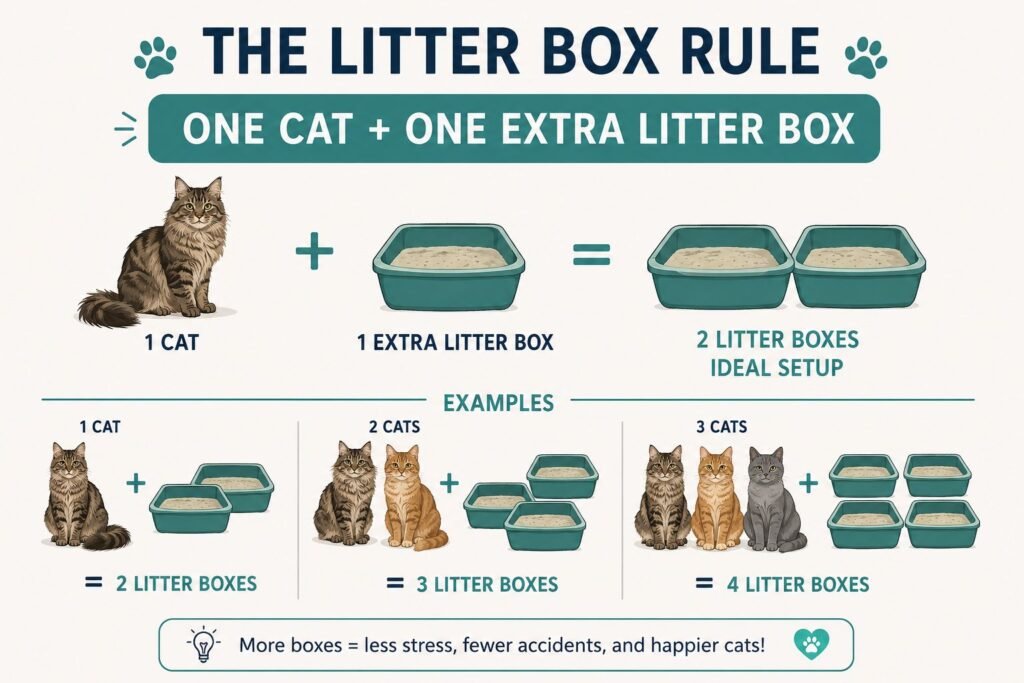
The general rule for how many litter boxes a house needs is that there should be as many boxes as there are cats, plus one extra box. The cat-plus-one rule is supported by AAHA/AAFP guidance, which recommends one litter box per cat plus one additional box, especially in multi-cat homes. So one Maine Coon requires two litter boxes. Multi-cat homes need even more litter boxes. A common veterinary and behaviour guideline recommends one litter box per cat, plus one extra. This gives each cat a box of their own and allows the owner to reduce the pressure of having multiple cats sharing a box.
Don’t use two small boxes instead of one adequate box. One box must be large enough for all essentials. A Maine Coon requires a lot of space. When possible, place boxes in different locations. Cats may see stacked boxes as one.
| Home Setup | Recommended Number | Placement Tip |
|---|---|---|
| One Maine Coon | 2 boxes | Place in two accessible areas |
| Two cats | 3 boxes | Avoid grouping all together |
| Three cats | 4 boxes | Use different rooms if possible |
| Multi-floor home | At least one per used floor | Help cats avoid stairs |
| Senior Maine Coon | 2 or more easy-entry boxes | Keep one near favorite area |
Cleaning and Maintenance Tips for Large Cat Litter Boxes
Bigger cats mean bigger problems for the litter box. Maine Coons bring big problems. They leave larger clumps and dig more. Daily and even twice a day may be required due to the trust factor. Other cats may follow your Maine Coon. Daily scooping is not optional; veterinary litter-box guidance recommends removing urine and feces at least once daily, and preferably more often in busy boxes.
Consider the usage of plastic. It may hold the box together, but it will escape the odor eventually. The box really doesn’t stand a chance. An easy fix for this is going with stainless steel, but it will need a deep clean as well. Avoid big box solutions with strong scents. It may seem like a good option, but sticking to a pet safe mild option is better.
Best Timing and Importance of Cleaning Tasks
Waste should be scooped daily to keep odours and refuse to a minimum. Waste should be stirred and levelled daily to maintain an even depth. Dust and residue should be wiped off the edges weekly. To avoid odour buildup, the box should be washed deep monthly, and the box should be replaced if the plastic becomes scratched or smelly. To reduce tracking around the room, the mat area should be checked weekly.
How to Control Odor in a Large Litter Box
The key to keeping odor in a large litter box under control is to combine many small habits. Use a large box, scoop waste often, and select a good clumping litter. Keep the box in a well ventilated area and wash the box often to avoid trapping odors. Controlling odors is also a bad habit. Your cat’s sense of smell is better than yours, and if you think it’s bad, your cat will think it’s worse.
Common Mistakes to Avoid When Buying a Maine Coon Litter Box
The biggest mistake people make is not checking the dimensions and only going off of the word large. Brands say large a lot and most of the time, a box can be large for a 9-pound cat and small for a 20-pound Maine Coon, so huge is a relative term. Dimensions are more important than a box’s label. Another mistake is trying to conceal a box too much. This can make your cat feel unsafe. Your cat doesn’t care about how well the box setup goes with your decor.
| Mistake | Why It Fails | Better Choice |
|---|---|---|
| Buying by label only | “Large” may still be small | Check real dimensions |
| Choosing a low hood | Cat must crouch | Use open or tall covered box |
| Ignoring entry height | Seniors may struggle | Choose low-entry access |
| Using strong scent | Cat may reject smell | Use unscented litter |
| Placing near machines | Noise can scare cats | Choose quiet location |
| Cleaning too rarely | Odor builds fast | Scoop daily |
| Buying tiny mats | Large cats step over them | Use a wide tracking mat |
How to Introduce a New Litter Box to Your Maine Coon
Some cats get confused when suddenly getting a new box. For now, place new box next to old box. Keep litter the same if they like it. Maine Coons are giant floofs so give them time to explore the new box on their own. Cats like to be invited to do things not forced.
Once your Maine Coon is using the new box regularly go ahead and remove the old one. If they are avoiding the new box, put your plans on hold and try to keep both boxes for a longer time. If the new box is covered, take the cover off for now. Changes should feel safe. Boring is good here.
Best Litter Box for Maine Coon Kittens vs Adult Maine Coons
Kittens need easy entry. Adult Maine Coons need large space. Senior cats need both space and comfort. That means the right box changes as your cat grows. A kitten box may become useless fast, so plan ahead instead of buying the smallest option. Mobility matters too, because age-related or painful conditions can make it harder for a cat to reach or enter the litter box comfortably.
The best litter box for Maine Coon kittens should be low enough to enter without effort. As your cat grows, move to a larger box before accidents begin. Do not wait until your cat is already hanging over the edge like a furry overstuffed suitcase.
How We Evaluated Litter Boxes for Maine Coons
We evaluated Maine Coon litter boxes by using size, access, stability, odor control, and cleaning effort as the main criteria. A good box must fit the cat first and the room second.
| Evaluation Factor | Why It Matters for Maine Coons |
| Usable interior length | Allows the cat to enter, turn, dig, squat, and cover waste. |
| Usable interior width | Reduces cramped posture and edge accidents. |
| Side height | Helps control litter scatter from strong digging. |
| Entry height | Supports kittens, seniors, and cats with joint stiffness. |
| Material | Affects odor retention, scratching, staining, and cleaning. |
| Cleaning access | Makes daily scooping easier and more consistent. |
| Stability | Prevents sliding, tipping, or wobbling during use. |
| Interior shape | Reduces cramped corners and unusable curved space. |
Final Buying Advice: Which Maine Coon Litter Box Is Best?
Most Maine Coons fit best in an extra-large open or high-sided litter box. These boxes allow the cat to breathe and the box to be cleaned easily. Stainless steel boxes are great for odor, and high-sided boxes are best for cats who dig a lot.
The best litter box for Maine Coons has a lot of space, is stable, easy to enter, and easy to clean. The best box is the one that fits your cat, not your room. Your Maine Coons, your nose, and especially your floor will be happy you bought a larger box.
FAQs About the Best Litter Box for Maine Coon Cats
What size litter box is best for a Maine Coon?
The best size is one that lets your Maine Coon enter, turn, dig, squat, and leave without touching every wall. Many adults need an extra-large box around 24 inches or longer. Very large males may need even more room. Measure your cat from nose to tail base before buying.
Do Maine Coons need a special litter box?
Maine Coons do not need a fancy litter box, but they usually need a bigger one. Standard trays are often too short and narrow. A large open or high-sided box is usually better than a small covered box with limited interior space.
Are covered litter boxes good for Maine Coons?
Covered boxes can work for Maine Coons only when they are truly oversized. Your cat should not need to crouch or squeeze through the doorway. Poor airflow is another concern because covered boxes can trap odor inside.
Is a top-entry litter box good for a Maine Coon?
A top-entry litter box can reduce tracking, but it is not ideal for every Maine Coon. Young and agile cats may use it well. Seniors, kittens, overweight cats, and cats with joint stiffness may find it uncomfortable.
How many litter boxes should a Maine Coon have?
One Maine Coon should ideally have two boxes. The common rule is one box per cat, plus one extra. In a multi-floor home, place boxes where your cat can reach them easily without needing to travel too far.
What litter is best for Maine Coons?
Low-dust, unscented litter is usually a smart choice. Long-haired cats may track fine litter more easily, so you may need a low-tracking option and a large mat. Avoid heavy perfume because many cats dislike strong scents.
Why is my Maine Coon peeing outside the litter box?
A Maine Coon may pee outside the box because the box is too small, dirty, hard to enter, poorly placed, or filled with litter the cat dislikes. Stress and medical problems can also cause this. Sudden changes in urination should be checked by a vet.