Table of Contents
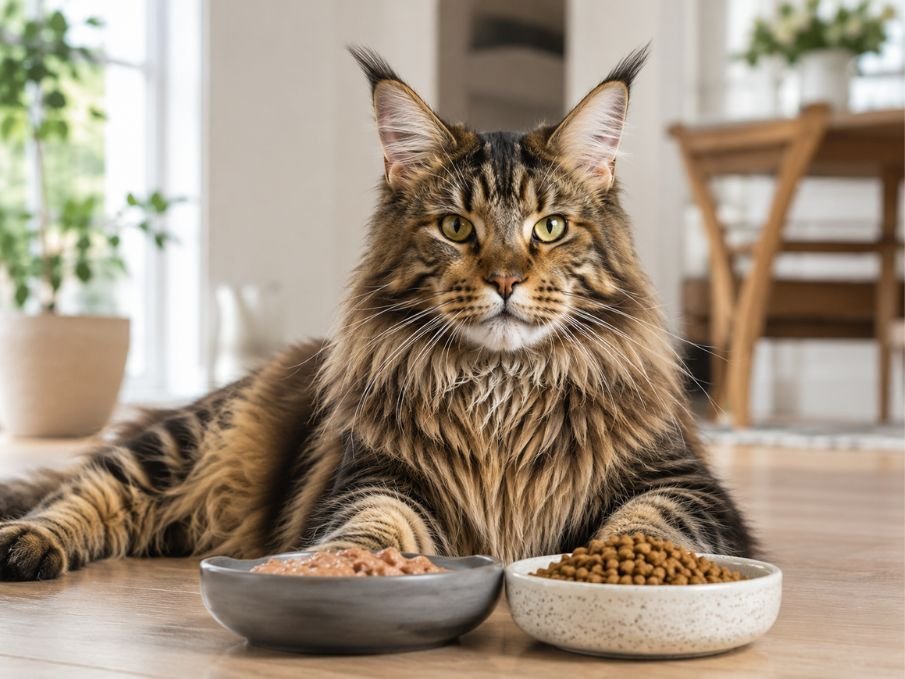
Maine Coon cats need complete and balanced food that matches their life stage, body condition, and activity level. The best food for a Maine Coon supports lean muscle, steady growth, healthy weight, coat quality, hydration, and digestion.
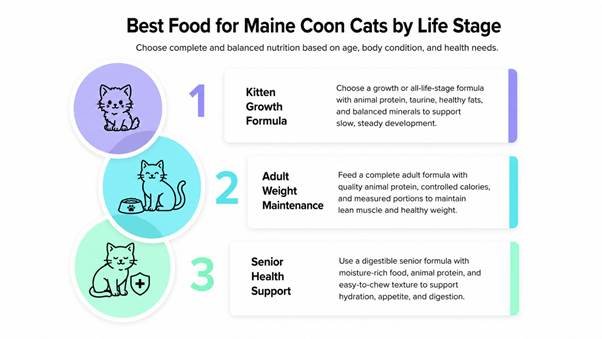
Kittens need growth formulas. Adult Maine Coons need maintenance formulas with controlled calories. Senior Maine Coons may need digestible food that supports hydration and appetite. Wet, dry, and mixed feeding can all work when the food meets feline nutrition standards and the total daily calories stay appropriate.
Why Choosing the Best Food for Maine Coon Cats Matters
Maine Coons are large cats, and food that promotes proper growth is important. Food choices for kittens should be high in protein, and nutrients, and be calorie-dense to foster growth of muscles. Adult Maine Coons require food that maintains body weight while sustaining energy. The slow growth of Maine Coons can extend to 2 years, thus, a well-thought diet is important to avoid stunted growth. Excess calories can make Maine Coons overweight, especially indoor or neutered cats. If you want to compare the size, nutrition needs, and care requirements of different long-haired cats, visit our Compare Cat Breeds tool.
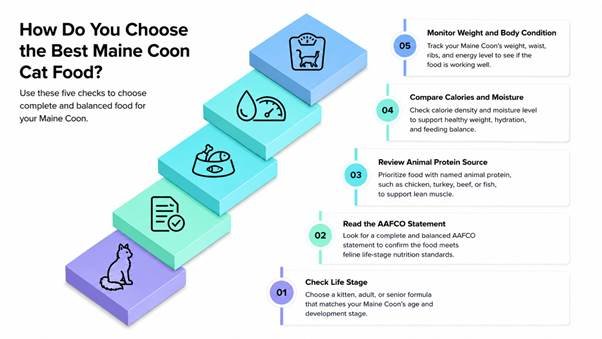
A diet presented as ‘complete and balanced’ contains all the key nutrients for development. According to the Association of American Feed Control Officials (AAFCO), complete and balanced cat food should meet minimum nutritional standards for protein, fat, vitamins, and minerals. When looking for the right food for your Maine Coon, always look for the AAFCO statement as this will tell you the food is nutritionally adequate for your cat’s life stage. (AAFCO)
What Is the Best Food for Maine Coon Cats?
The World Small Animal Veterinary Association (WSAVA) recommends choosing pet foods from manufacturers that follow strong nutritional research and quality-control standards. What type of food (wet, dry, or a mixture of both) does not matter as long as it is appropriate for that Maine Coon. The main goal of feeding your cat is ensuring the Maine Coon is maintaining a healthy body condition while also receiving the proper nutrients.
| Life Stage | Recommended Food Type | Goal |
| Kitten | Growth/all-life-stage formula | Support slow, steady growth |
| Adult | Maintenance formula | Maintain lean muscle and weight |
| Senior | Senior formula | Support digestion and joints |
| Indoor | Controlled-calorie formula | Prevent weight gain and hairballs |
| Overweight | Vet-guided formula | Safe fat loss without muscle loss |
| Sensitive stomach | Digestible formula | Minimize vomiting or diarrhea |
| Heavy shedding | Fatty acid-rich formula | Coat and skin health |
For a deeper feeding guide including portion control, safe foods, and nutrient planning, explore our complete Maine Coon Diet & Nutrition resource.
Best Food for Maine Coon Kittens
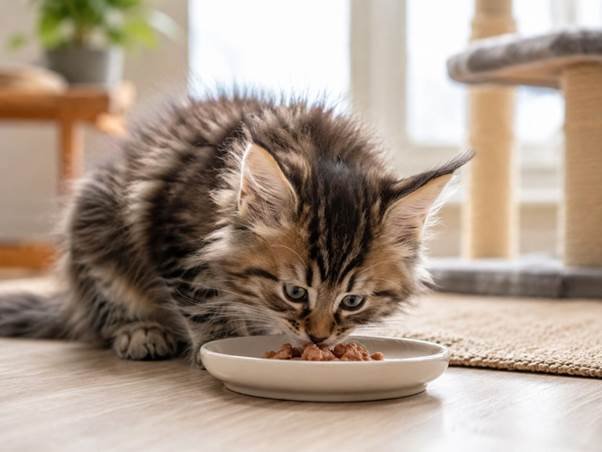
For Maine Coon kittens, make sure to get them food that is labelled for growth or for all life stages. This is because Maine Coon kittens need higher protein and also higher calories to develop the large muscles and bone structure that Maine Coons are known for. If you feed a Maine Coon kitten food that is labelled for adult cats, it will may not provide the nutrient profile that growing kittens need
Wet food contains moisture and soft bites which help small teeth, while dry food provides dental exercise and structured portions. A mix works best. Kittens may use growth formulas until they reach two years of age as this breed is slowly maturing. Having consistent vet visits helps maintain a healthy weight and condition. (PetMD)
Best Food for Adult Maine Coon Cats
Adult Maine Coons require a higher content of animal protein with a moderate amount of fat. This is crucial as protein helps maintain muscle mass while fat supports energy. Indoor or neutered Maine Coons may gain weight when portions exceed energy needs. While feeding charts are a good reference, observing body conditions, like the current state of ribs, waist, and belly are imperative.
The texture of the food can also help. Maine Coons have large jaws, so larger kibble or wider bowls may improve comfort that wider food will prevent whisker fatigue. Wet food provides hydration. The right food will provide energy, a healthy coat, and help with digestion.
What Nutrients Should Maine Coon Food Contain?
| Nutrient | Why It Matters for Maine Coons | Food Sources |
| Animal protein | Supports lean muscle and growth | Chicken, turkey, beef, fish |
| Taurine | Supports heart, vision, and reproduction | Animal-based ingredients |
| Fat | Supplies energy and supports coat quality | Poultry fat, fish oil |
| Omega-3 fatty acids | Support skin, coat, and inflammation balance | Salmon oil, fish oil |
| Moisture | Supports hydration and urinary health | Wet food, fresh water |
| Fiber | Supports digestion and hairball control | Pumpkin, beet pulp, selected Fibers |
| Minerals | Support bones, teeth, nerves, and muscles | Balanced commercial formulas |
Wet Food Vs Dry Food
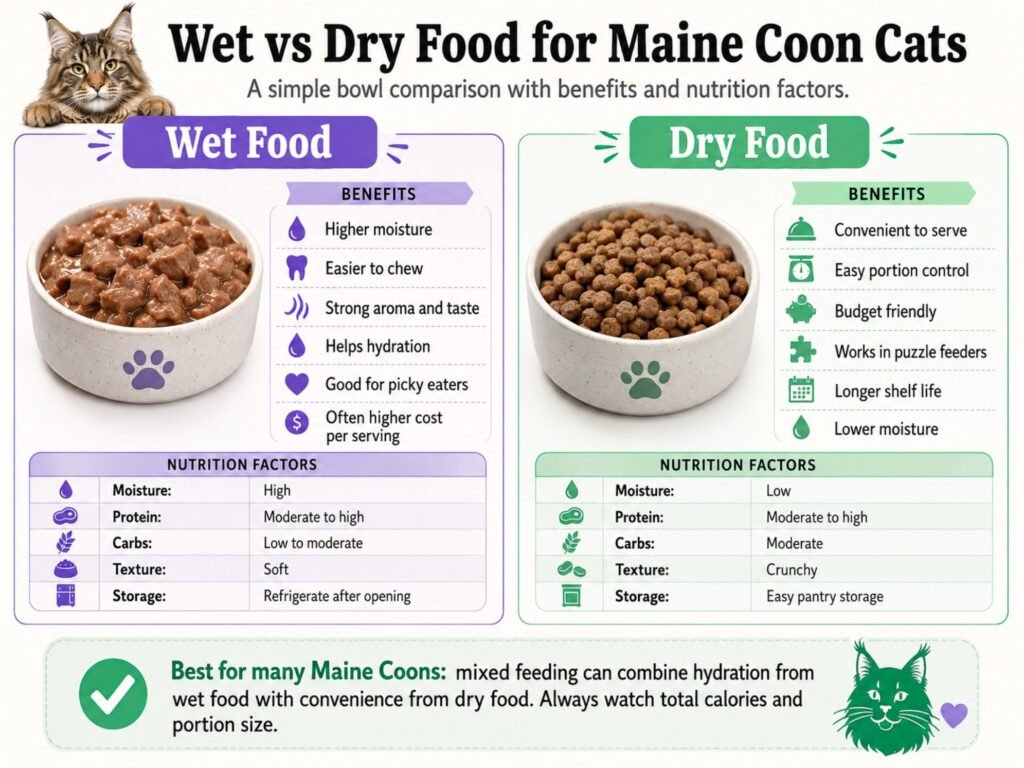
Wet food is more palatable, contains moisture, and has soft bites. This helps Maine Coons, especially ones that are more indoor and may not drink too much, stay hydrated. Dry food provides adequate portions and can be used for puzzle feeding. When using both, the food should be monitored to keep the Maine Coons from gaining too much weight.
| Food Type | Benefits | Considerations |
| Wet food | Moisture, palatability | Can spoil faster |
| Dry food | Convenience, structure | Less hydration |
| Mixed feeding | Best of both worlds | Track calories carefully |
Which Health Factors Affect Maine Coon Food Choices?
Health factors affect Maine Coon food choices because weight, hydration, digestion, and mobility influence daily nutrition needs. Food can support general health, but it cannot diagnose, prevent, or treat disease.
| Health Factor | Food Connection |
| Weight gain | Controlled calories help maintain body condition |
| Large joints | Lean weight reduces stress on the body |
| Hairballs | Fiber, hydration, and grooming can support hairball control |
| Urinary health | Wet food and fresh water support hydration |
| Sensitive stomach | Digestible formulas may support stool quality |
| Heart health | Taurine and balanced nutrition support normal feline body functions |
Cats with heart disease, urinary symptoms, kidney disease, diabetes, chronic vomiting, or appetite loss need veterinary care before a diet change.
How Much to Feed
Feeding guides and food chart are only a good place to start the considerations for daily amounts and activity level, weight, and age. Young kittens are best fed multiple times a day with small portions, and adult Maine Coons do well with a couple of portion-controlled meals a day. Older cats find it best when portions are small and easy to digest. Maintaining the proper shape and weight of the cat will show that you are feeding the correct portions.
| Age Group | Focus | Check |
| 2–6 months | Growth | Steady weight gain |
| 6–12 months | Muscle development | Lean frame |
| 12–24 months | Transition | Monitor body condition |
| Adult | Maintenance | Weight and energy |
| Senior | Health support | Appetite and mobility |
What Feeding Routine Works Best for Maine Coons?
A measured feeding routine helps Maine Coons maintain a healthy body condition. Kittens often need several small meals per day, while adults usually do well with two portion-controlled meals.
Use these feeding habits:
- Measure meals with a scale or measuring cup.
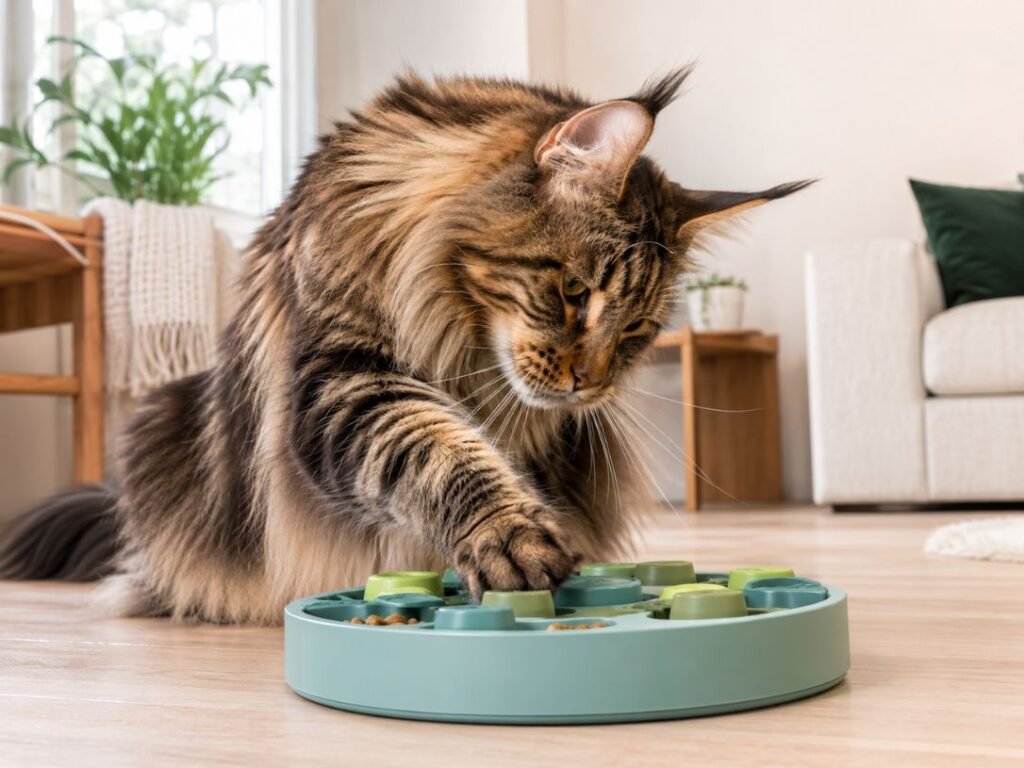
- Use puzzle feeders to slow fast eating.
- Serve food in a wide, shallow bowl.
- Keep fresh water available.
- Introduce new food over 7 to 10 days.
- Track weight and body condition monthly.
Stable stool, steady energy, healthy coat quality, and consistent appetite show that a food routine suits your Maine Coon.
Proper feeding is also an important part of overall Maine Coon Care, especially for maintaining healthy weight, hydration, and long-term wellness.
When Should You Ask a Veterinarian About Maine Coon Food?
You should ask a veterinarian about Maine Coon food when your cat has rapid weight gain, weight loss, vomiting, diarrhea, urinary symptoms, appetite loss, heart disease, kidney disease, diabetes, or a prescribed diet. Food choice can support health, but it does not replace diagnosis or treatment.
FAQs
What food is best for a Maine Coon with a sensitive stomach?
A digestible formula with consistent protein sources may help a Maine Coon with a sensitive stomach. Veterinary guidance matters when vomiting, diarrhea, or appetite loss continues.
Do Maine Coons need more protein than normal cats?
Maine Coons need enough animal protein to support large muscle mass. They do not need random high-protein food if the formula is not complete and balanced.
Is grain-free food better for Maine Coons?
Grain-free food is not automatically better for Maine Coons. Nutrient balance, protein quality, calories, and digestibility matter more than the presence or absence of grain.
How often should you feed a Maine Coon?
Kittens usually need several small meals daily. Adult Maine Coons often do well with two measured meals per day. Feeding frequency should match age, activity, and body condition.
What food helps a Maine Coon’s coat?
Food with animal protein, essential fatty acids, taurine, zinc, and balanced vitamins supports coat quality. Grooming, hydration, and parasite control also affect the coat. Along with proper nutrition, regular Maine Coon Grooming helps reduce matting, shedding, and coat-related skin problems.
Final Thoughts
Maine Coon cats thrive on food that is complete and balanced, of high quality, and appropriate for the life stage of the cat. Maine Coons can adapt to wet, dry, or mixed diets, as long as the portions and calories are controlled. The high priority nutrients in the diet are protein, essential nutrients, and water. For Maine Coons, it is very important to monitor their weight and energy levels, and the quality of their coat to ensure that the diet is supporting this large and beautiful breed.