Table of Contents
Maine Coon cats are known for their large size, thick fur, and playful personality. Because they grow bigger and mature slower than most house cats, their diet needs extra care and planning. Feeding them the wrong food can lead to obesity, joint issues, and long-term health problems.
So, what do Maine Coon cats eat to stay strong, active, and healthy?
In this guide, you’ll learn what Maine Coons eat in the wild, what they should eat at home, their nutritional needs, the best food types, feeding charts, and foods you must avoid because Maine Coons are a high maintenance breed, it’s important to understand both their food needs and Maine Coon care costs.
What Do Maine Coon Cats Eat in the Wild?
Before becoming family pets, Maine Coons and other breeds, were referred to as domestic because of their ability to socialize with their human counterparts. They were socialized with humans as they could hunt and kill small game to feed human families. In the wild, Maine Coons relied on hunting small animals for survival. Maine Coon cats used to hunt other animals for food. Wild style diets are very high in proteins, taurine, omega fatty acids, and moisture. They support strong bones, heart function, sharp vision, and healthy fur. This is why Maine Coon food should replicate their prey so closely.
Maine Coon cats in the wild eat the following food:
- Birds
- Rabbits
- Fish (salmon, tuna, and Mackerel)
- Small rodents (mice and rats)
- Insects and small reptiles
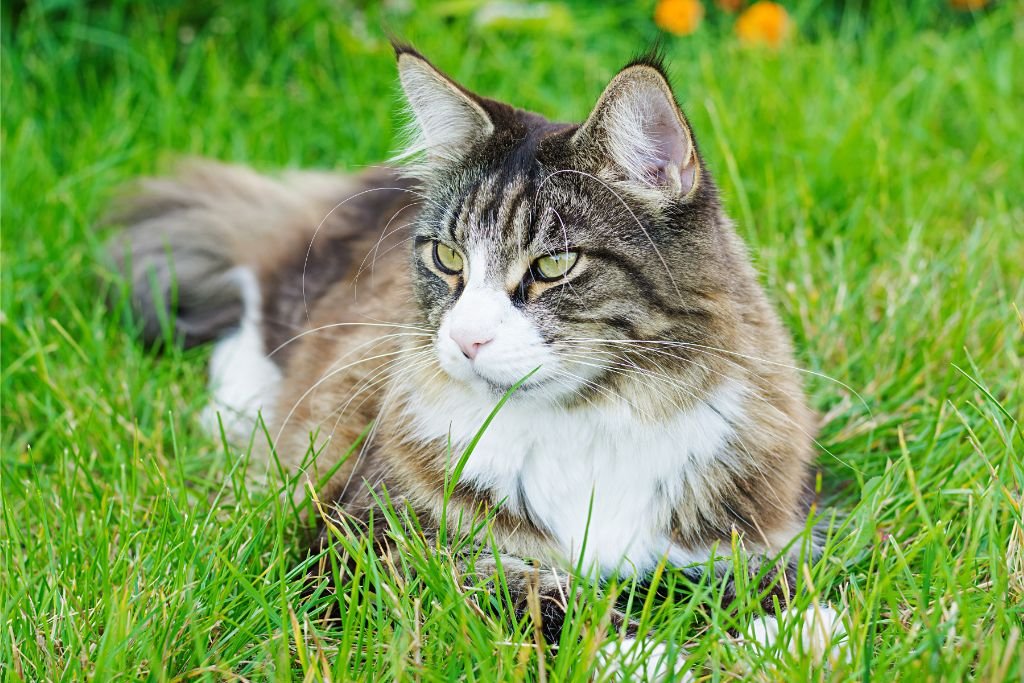
Maine Coon hunting in nature.
What Do Maine Coon Cats Enjoy Eating at Home?
Maine Coons are natural hunters, even if they don’t hunt at home. They prefer food with a strong aroma, soft texture, and high meat content. Most Maine Coons enjoy seafood Flavors like salmon, and tuna, plus shrimp, while chicken and turkey are great everyday proteins.
A healthy home diet should be high in animal proteins, moderate in fat, low in carbohydrates, and free from fillers like sugar, corn, and artificial preservatives. It is also important that they are provided moisture, as Maine Coons can be prone to kidney diseases if they are dehydrated.
Maine Coons usually enjoy:
- Chicken
- Turkey
- Beef
- Salmon
- Tuna
- mackerel
- Organ meat (small amounts)
Maine Coons also love strong smells, so seafood-based cat food is often a hit.
What Animals Do Maine Coon Cats Eat?
Even though Maine Coons are most often kept indoors, they are excellent hunters. Generations of predatory behaviours and survival instincts have bestowed Maine Coons with strong paws, sharp claws, and an overall alert nature. Even indoor Maine Coons still have strong hunting instincts.
This is why most Maine Coons and need meat and an animal-heavy diet and have an aversion to eating plant-based food. The following are some prey Maine Coons are likely to hunt:
- Mice / Rats
- Birds
- Fish
- Frogs
- Crustaceans (shrimp)
Nutritional Needs of Maine Coon Cats
Maine Coons need a considerable amount of protein, fatty acids, and micronutrients. This is because of their size. Maine Coons need more energy than other cat breeds because they have a greater muscle and bone structure. They also have more fur. Obesity, arthritis, hyperthyroidism, and a poor coat condition can be caused by an inadequate diet.
A greater energy level, improved digestion, and overall health is the result of a more balanced diet. Nutrients are classified as:
- Protein: Builds muscles and body growth
- Taurine: Heart and eyesight protector
- Omega fatty acids: Improves coat and skin
- Moisture: Kidney and urinary protector
- Vitamins and minerals: Cell turnover and immunity booster
How Much Should a Maine Coon Eat Per Day?
| Weight of Cat | Daily Calories | Food Type |
| 5–7 kg | 250–300 kcal | Wet + Dry |
| 7–9 kg | 300–350 kcal | Wet Focus |
| 9+ kg | 350–420 kcal | High Protein |
Best Foods for Maine Coon Cats
A Maine Coon’s food should be high quality. Maine Coons do better on meals that are mostly meat, easy to digest, and do not have a lot of additives.
1. High-Quality Wet Food
Wet food has moisture, is easy to digest, and prevents dehydration.
2. Dry Food (In Moderation)
Only choose grain-free formulas with high meat content.
3. Raw & Fresh Foods (Optional)
- Cooked chicken
- Salmon
- Turkey
- Organ meats (small amounts)
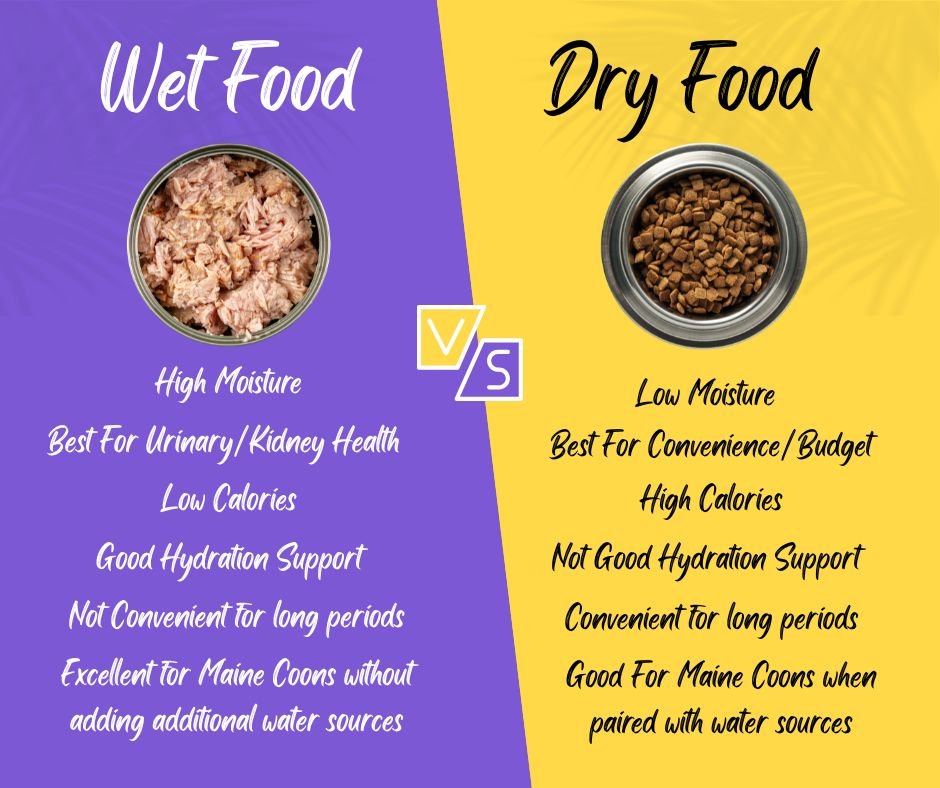
Comparison of wet vs dry food bowls.
Feeding Chart by Age
| Life Stage | Meals Per Day | Main Focus |
| Kitten (0–12 months) | 3–4 | Growth & muscle |
| Adult (1–7 years) | 2 | Energy & weight control |
| Senior (7+ years) | 2 small | Joint & digestion |
Foods to Avoid
Some Maine Coons are allergic to certain foods. Some foods may be deadly. Some foods may cause constipation or diabetes. Maine Coons should never eat:
- Chocolate
- Onions
- Garlic
- Dairy products
- Sugar
- Sweet corn
- Bacon
- Processed meat
Signs of Poor Nutrition
If a Maine Coon has a nutritional problem, the symptoms may be physical or behavioural. Depending on the symptoms, they are a good indicator that the food may not be the best.
Some warning signs to look out for may include:
- Unbalanced weight
- Decreased energy
- Loss of appetite
- Hair loss
- Digestive problems
How to Improve Diet Quality
Cat health can be improved greatly with little effort. As an example, consider changing to foods with protein sources made by reputable manufacturers.
Helpful tips:
- Select brands with PFMA or AAFCO certifications
- Include omega-rich fish once a week
- Stay away from preservatives and fillers
- Always provide fresh water
Always consult a veterinarian before changing your cat’s diet, especially if your Maine Coon has allergies or medical conditions.
Conclusion
To protect the long-term health of your Maine Coon, understanding what they are allowed to eat is vital. It is important to provide a protein-rich, moisture balanced diet. This supports strong muscles and contributes to a happy life.
For more expert Maine Coon guides, pricing tips, and care advice, explore CoonAura and become a confident Maine Coon owner.